French
Portuguese
Russian
German
Spanish
Japanese
Korean
Irish
Greek
Turkish
Italian
Danish
Romanian
Indonesian
Czech
Afrikaans
Swedish
Polish
Basque
Catalan
Esperanto
Hindi
Lao
Albanian
Amharic
Armenian
Azerbaijani
Belarusian
Bengali
Bosnian
Bulgarian
Cebuano
Chichewa
Corsican
Croatian
Dutch
Estonian
Filipino
Finnish
Frisian
Galician
Georgian
Gujarati
Haitian
Hausa
Hawaiian
Hebrew
Hmong
Hungarian
Icelandic
Igbo
Javanese
Kannada
Kazakh
Khmer
Kurdish
Kyrgyz
Latin
Latvian
Lithuanian
Luxembourg
Macedoniar
Malagasy
Malay
Malayalam
Maltese
Maori
Marathi
Mongolian
Burmese
Nepali
Norwegian
Pashto
Persian
Punjabi
Serbian
Sesotho
Sinhala
Slovak
Slovenian
Somali
Samoan
Scots Gaelic
Shona
Sindhi
Sundanese
Swahili
Tajik
Tamil
Telugu
Thai
Ukrainian
Urdu
Uzbek
Vietnamese
Welsh
Xhosa
Yiddish
Yoruba
Zulu
The piston pump hydraulic system stands as a cornerstone of modern engineering, powering a wide range of applications across industries. From heavy machinery in construction to precision movements in manufacturing, understanding the dynamics of this system is crucial. In this blog, we'll delve deep into the components, working principles, and advantages of the piston pump hydraulic system.
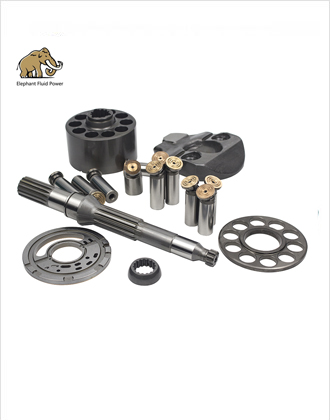
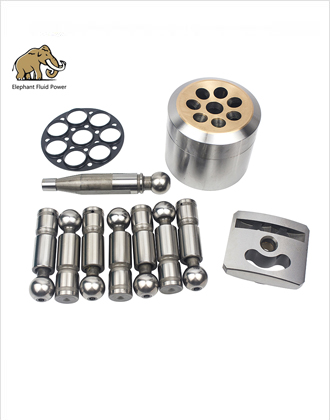
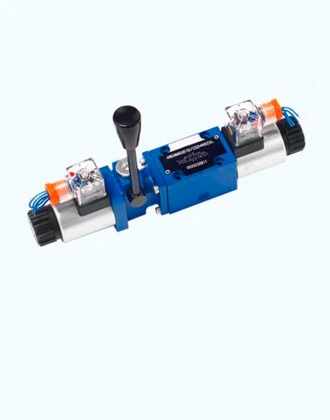
At the heart of the system is the piston pump itself. This component uses reciprocating pistons to create a continuous flow of hydraulic fluid. As the pistons move, they create pressure differentials that draw in fluid during the suction stroke and push it out during the discharge stroke. The hydraulic reservoir stores the hydraulic fluid required for the system's operation. It also helps dissipate heat generated during operation, ensuring that the fluid remains at an optimal temperature for efficient performance. The hydraulic fluid, often an oil-based fluid, serves as the medium through which power is transmitted within the system. It transfers force from the pump to the actuator or motor and back, allowing for the conversion of mechanical power into hydraulic energy. Valves play a crucial role in controlling the direction, flow rate, and pressure of the hydraulic fluid. Directional control valves determine the path the fluid takes, while flow control valves regulate the speed of fluid flow. Pressure control valves, on the other hand, maintain the desired pressure levels within the system.
The piston pump hydraulic system operates on Pascal's principle, which states that when pressure is applied to a fluid in an enclosed space, it is transmitted equally in all directions. Here's how the system works. During this phase, the piston draws hydraulic fluid from the reservoir into the pump chamber. The pressure in the chamber is lower than atmospheric pressure, causing fluid to flow into the chamber. As the piston moves in the opposite direction, it compresses the hydraulic fluid in the chamber. This compression increases the pressure of the fluid, causing it to be pushed out of the pump chamber and into the hydraulic circuit. The high-pressure hydraulic fluid flows through the system's components, including valves and actuators, to perform mechanical work. The actuators convert the hydraulic energy into the desired type of motion, whether linear or rotary.
Piston pumps can deliver high levels of power in a relatively compact form factor. This power density is crucial for applications where space is limited, such as in construction equipment. The system's ability to control the direction, speed, and force of motion with precision makes it suitable for tasks that demand accurate and controlled movements, like in robotics and manufacturing. With the integration of appropriate valves, the system can provide variable flow rates and pressure levels, allowing for versatile operation in different scenarios. Hydraulic systems, when properly maintained, are known for their durability and reliability, making them ideal for heavy-duty applications that require consistent performance.
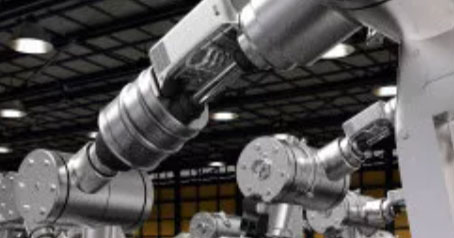
Hydraulic systems power heavy machinery like excavators, loaders, and bulldozers. The piston pump hydraulic system's ability to provide high force and precise control is essential for tasks involving excavation and material handling. Manufacturing processes often require controlled movements, such as in CNC machines and robotic arms. The piston pump hydraulic system ensures precise motion and enables complex tasks to be performed with accuracy. Hydraulic systems play a role in vehicles' power steering and braking mechanisms. The piston pump hydraulic system assists in providing responsive steering and efficient braking. In aerospace applications, hydraulic systems contribute to the operation of landing gear, flaps, and other critical components. Their reliability and ability to handle high pressures are vital in such demanding environments.
The piston pump hydraulic system represents a remarkable fusion of mechanical engineering and fluid dynamics. Its ability to transmit power, provide precise control, and operate reliably across a diverse range of applications underscores its significance in modern industrial processes. Whether it's lifting tons of earth at a construction site or delicately maneuvering components on an assembly line, the piston pump hydraulic system continues to shape industries and contribute to technological advancements.