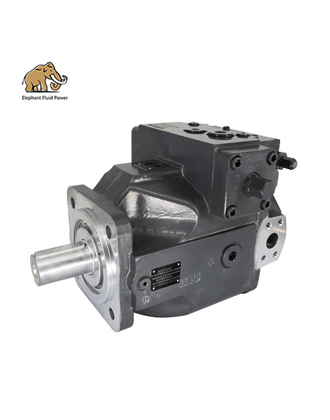
In various heavy-duty operations involving large construction machinery, the A11VO series hydraulic pumps serve as the core components of the equipment’s hydraulic power system, and their stability directly determines construction efficiency and equipment uptime. Many machine owners often encounter a hidden and persistent problem: while the equipment operates normally and smoothly under no-load conditions, once it enters high-intensity operating conditions—such as heavy-duty excavation, high-pressure pumping, or continuous heavy-duty work—issues arise, including weak power, insufficient pressure, speed drop under load, and a sudden drop in operational efficiency. Since these pressure deficiency issues do not cause immediate equipment shutdown, they are easily overlooked, leading to continued operation while the system is faulty. Over time, this not only significantly increases fuel consumption but also causes secondary damage—such as pump body wear, system overheating, and pipeline deterioration—thereby substantially raising operational and maintenance costs. This article provides a targeted analysis of the core causes of pressure deficiency in the A11VO series hydraulic pumps, along with standardized troubleshooting procedures, proper repair methods, and preventive measures.
The core characteristics of this malfunction are very clear: the equipment operates normally under light loads and at idle, and the hydraulic system pressure meets specifications; however, when subjected to heavy-load shocks or sustained pressure conditions, the system’s operating pressure fails to reach the rated standard, resulting in jerky and sluggish composite movements and insufficient power output, which fails to meet construction requirements. Unlike sudden failures, insufficient pressure in the A11VO pump is mostly a progressive failure caused by long-term harsh operating conditions, improper maintenance, and the accumulation of parameter deviations. It is highly insidious and deteriorates rapidly, making it one of the most common and difficult-to-diagnose faults in the operation and maintenance of construction equipment.
Contamination in the hydraulic system, leading to excessive internal leakage within the pump housing, is the root cause of this failure. Construction sites are dusty and operate under complex conditions. If hydraulic fluid that does not meet cleanliness standards is used for an extended period, filter elements are not replaced on time, or the hydraulic fluid emulsifies and deteriorates, impurities will continuously erode and wear down precision core components inside the pump housing, such as the pistons, distribution plate, and cylinder block. Once these components are worn, the sealing clearances inside the pump housing widen, causing internal leakage to rise continuously. As a result, hydraulic fluid is lost through internal circulation within the pump housing, preventing it from effectively delivering pressure and flow to the system. This ultimately manifests as insufficient pressure under heavy loads and a rapid rise in system oil temperature, leading to a combined failure characterized by “lack of power and high temperature.”
Next are pressure abnormalities caused by shifts in control parameters. The A11VO series hydraulic pumps rely on constant-power valves and pressure-cut-off valves to precisely regulate pressure and displacement. Prolonged high-frequency vibration and repeated heavy-load impacts can cause the pressure-regulating valve spool to stick and the internal springs to fatigue and lose tension, resulting in a gradual drift from the preset operating parameters. When the pressure cutoff threshold is too low or the constant-power ratio is unbalanced, the pump will automatically reduce its displacement prematurely, failing to establish high-pressure output and resulting in insufficient power during heavy-load operations. Such faults can be quickly repaired by calibrating the parameters with specialized equipment, without the need to disassemble the pump housing.
To address this malfunction, follow the standardized procedure of troubleshooting first, then repair. Prioritize inspecting the quality of the hydraulic fluid, the condition of the filter elements, and the cleanliness of the system; replace degraded fluid and aged filter elements, and remove contaminants from the fluid lines. Next, use specialized equipment to verify the pump’s pressure and power parameters, and precisely calibrate any deviations. If the issue is caused by minor component wear, performance can be restored through precision grinding or by replacing the complete set of sealing components. If core components are severely worn or internal leakage significantly exceeds acceptable limits, the core components or the entire pump assembly must be replaced promptly to prevent the failure from worsening.
Post-repair commissioning and routine preventive maintenance are key to preventing recurring failures. After repairs, all control parameters must be calibrated according to the original manufacturer’s standards and matched to the equipment’s engine power to ensure stable pump output. During routine operation and maintenance, it is essential to strictly adhere to hydraulic oil change intervals, regularly monitor system pressure and oil temperature, and keep the hydraulic system clean. This helps prevent component wear and parameter deviations at their source, thereby extending the pump’s service life.
Elephant Hydraulic specializes in the supply and repair of A11VO series hydraulic pump assemblies. With years of experience in the industry, we have a thorough understanding of the root causes of low-pressure issues in this series and the key repair procedures. All repair and calibration processes strictly adhere to the original manufacturer’s technical standards to ensure that the equipment’s power and pressure performance meet specifications after repair. For technical inquiries or purchasing needs, please visit the brand’s official website for more details.
aa11vo Rexroth ra data sheet
a11vo pdf
rexroth a11vo repair manual pdf
a11vlo Rexroth pdf
rexroth a11vo pump pdf
rexroth a11vlo service manual
a11vo rexroth pump
bosch rexroth a11vo manual
 French
 Portuguese
 Russian
 German
 Spanish
 Japanese
 Korean
 Irish
Irish
 Greek
Greek
 Turkish
 Italian
 Danish
 Romanian
 Indonesian
 Czech
Czech
 Afrikaans
 Swedish
 Polish
 Basque
 Catalan
 Esperanto
 Hindi
Hindi
 Lao
Lao
 Albanian
 Armenian
 Azerbaijani
 Belarusian
 Bengali
 Bosnian
 Bulgarian
 Cebuano
 Chichewa
 Croatian
 Dutch
Dutch
 Estonian
 Finnish
 Galician
 Georgian
 Haitian
 Hebrew
 Hmong
Hmong
 Hungarian
 Icelandic
 Javanese
 Kazakh
 Khmer
Khmer
 Latin
Latin
 Latvian
 Lithuanian
 Luxembourg
 Macedoniar
 Malagasy
 Malay
Malay
 Maltese
 Maori
Maori
 Mongolian
 Burmese
 Nepali
 Norwegian
 Pashto
 Persian
 Punjabi
 Serbian
 Sinhala
 Slovak
 Slovenian
 Somali
 Samoan
 Tajik
Tajik
 Thai
Thai
 Ukrainian
 Uzbek
Uzbek
 Vietnamese
 Welsh
Welsh
 Yiddish
 Yoruba