Elephant Fluid Power Co., Ltd.

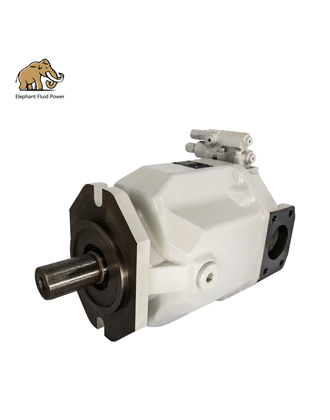
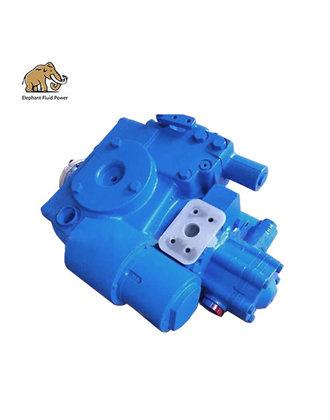
axial piston variable pump a10vso

As the core power source of hydraulic systems in engineering machinery, the axial piston variable pump A10VSO is widely used in various medium-sized engineering equipment due to its efficient power transmission and flexible variable adjustment features. To accurately diagnose its faults and perform standardized maintenance, it is essential first to understand its core working principles, while avoiding the fault types mentioned in the previous article and addressing new common problems precisely. Drawing on nearly 20 years of experience in the hydraulic industry, Elephant Company provides a detailed explanation of the pump's working principle, new fault types, and maintenance methods, helping construction units effectively resolve equipment issues.


The core working principle of the axial piston variable pump A10VSO is based on the logic of 'plunger reciprocation to suction and discharge oil, and the variable mechanism to adjust flow.' Its structure is precise and efficient. Inside the pump body, the plungers are evenly distributed within the cylinder block and axially aligned with the drive shaft. When the drive shaft rotates the cylinder block, the plungers carry out reciprocating linear motion under the action of the swash plate—during rotation to the suction zone, the plungers extend outward, increasing the pump chamber volume, creating negative pressure, and drawing in hydraulic oil; during rotation to the discharge zone, the plungers are pushed in by the swash plate, reducing the pump chamber volume and discharging high-pressure hydraulic oil. The variable function is achieved by adjusting the swash plate angle; changing the angle can flexibly adjust the plunger stroke, thereby controlling the output flow to meet the power demands of different working conditions. This is also the core advantage that differentiates it from fixed pumps.


Based on actual work scenarios, the axial piston variable pump A10VSO is prone to three new common types of faults, each with clear troubleshooting directions and simple repair methods that can be completed without professional equipment. The first type is variable mechanism failure, manifested as the inability to adjust flow or the pump body remaining at a fixed displacement. The main causes are stuck control mechanisms, a blocked servo valve, or a damaged spring. When troubleshooting, focus on inspecting the adjusting screw and the servo valve, and check if the spring elasticity is normal. During repair, disassemble the control mechanism, clean internal debris, clear the servo valve, replace damaged springs, and then reassemble and adjust the flow to ensure normal variable function.  


The second type is pump body overheating, manifested as a sudden rise in pump body temperature and hydraulic oil becoming hot after operating for a while. This is usually caused by oil viscosity mismatch, poor heat dissipation, or excessive internal component friction. When troubleshooting, first check whether the hydraulic oil viscosity meets the equipment requirements and inspect if the cooling circuit is blocked. For repairs, replace the hydraulic oil with the appropriate viscosity, clean the cooling circuit, lubricate components like pistons and the cylinder block if friction is excessive, and if necessary, replace worn parts.  


The third type is a sudden drop in discharge pressure, unable to reach the rated value, mainly due to poor fitting between the distributor plate and the cylinder block, damaged piston seals, or a clogged suction filter. When troubleshooting, disassemble the pump, check the distributor plate contact surface and piston seals, and inspect the suction filter for debris blockage. For repairs, grind the distributor plate contact surface, replace damaged piston seals, clean the suction filter, and reassemble the pump, then perform a pressure test to ensure the discharge pressure meets standards.


The core of standardized maintenance lies in high-quality parts and professional expertise. For nearly 20 years, Elephant Company has been deeply engaged in the hydraulic field, providing comprehensive support for the A10VSO axial piston variable pump. The pumps produced by the company strictly follow original factory standards, with core components precisely machined to reduce the occurrence of failures from the source. The supplied maintenance parts are all original factory-compatible, with reliable quality to prevent secondary failures after repair. At the same time, the company is equipped with a professional technical team that can provide remote troubleshooting guidance and on-site repair services. Relying on a stock of 1,300 commonly used items, maintenance parts can be delivered quickly within 1-7 days, reducing equipment downtime. With high-quality products and professional services, the company has become a trusted hydraulic solution partner for construction units.


rexroth a10 axial piston pump

a10vso spec sheet

axial piston variable pump specs

axial piston pump pressure limit

bosch a10vso hydraulic pump

piston pump axial loading

a10vso hydraulic pump

axial piston pump