French
Portuguese
Russian
German
Spanish
Japanese
Korean
Irish
Greek
Turkish
Italian
Danish
Romanian
Indonesian
Czech
Afrikaans
Swedish
Polish
Basque
Catalan
Esperanto
Hindi
Lao
Albanian
Amharic
Armenian
Azerbaijani
Belarusian
Bengali
Bosnian
Bulgarian
Cebuano
Chichewa
Corsican
Croatian
Dutch
Estonian
Filipino
Finnish
Frisian
Galician
Georgian
Gujarati
Haitian
Hausa
Hawaiian
Hebrew
Hmong
Hungarian
Icelandic
Igbo
Javanese
Kannada
Kazakh
Khmer
Kurdish
Kyrgyz
Latin
Latvian
Lithuanian
Luxembourg
Macedoniar
Malagasy
Malay
Malayalam
Maltese
Maori
Marathi
Mongolian
Burmese
Nepali
Norwegian
Pashto
Persian
Punjabi
Serbian
Sesotho
Sinhala
Slovak
Slovenian
Somali
Samoan
Scots Gaelic
Shona
Sindhi
Sundanese
Swahili
Tajik
Tamil
Telugu
Thai
Ukrainian
Urdu
Uzbek
Vietnamese
Welsh
Xhosa
Yiddish
Yoruba
Zulu
Hyd motors are crucial components in a wide array of industrial applications. These powerful devices convert hyd pressure and fluid flow into mechanical motion, making them indispensable in industries such as construction, manufacturing, and transportation. In this blog, we'll dive into the intricacies of hyd motors, exploring their functioning, types, and advantages.
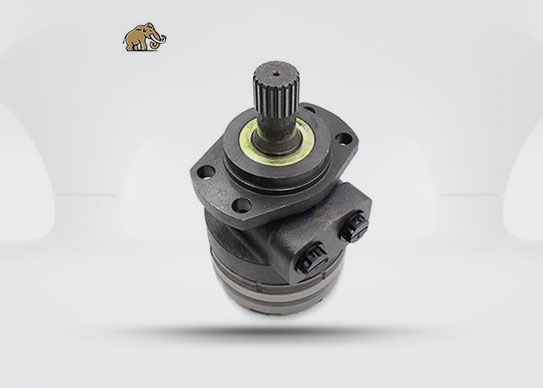
At its core, a hyd motor is a mechanical actuator that transforms hyd energy into rotational mechanical energy. This energy conversion is achieved by utilizing the pressure and flow of hyd fluid. hyd motors work in tandem with hyd pumps to form hyd systems, enabling precise control over motion and power transmission.
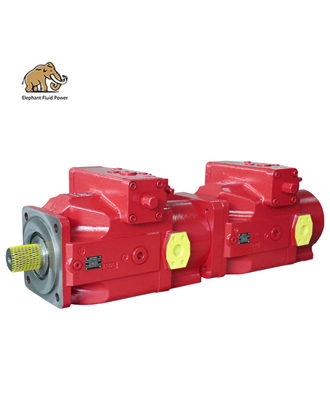
Gear motors use interlocking gears to produce rotational motion. They are relatively simple in design and offer excellent efficiency, making them suitable for a range of applications. These motors are often compact and cost-effective. Vane motors use vanes mounted on a rotor to generate motion. They provide smooth operation and can handle high speeds, making them suitable for scenarios where precise control is essential, such as in robotics and automation. In radial piston motors, pistons arranged radially around a central shaft generate rotation. These motors offer high power output and are commonly used in heavy-duty applications like construction equipment and industrial machinery. Axial piston motors feature pistons that move parallel to the axis of rotation. They provide high efficiency and are often found in mobile equipment, such as excavators and cranes, due to their ability to handle both high torque and high speed requirements.
hyd motors operate based on the principles of fluid dynamics and pressure differentials. When hyd fluid is introduced into the motor, it encounters a series of chambers, vanes, or pistons that are designed to transform the fluid's energy into mechanical motion. The pressure of the fluid causes these components to move, resulting in the rotation of the motor's output shaft.
Hyd motors offer impressive power-to-size ratios, making them ideal for applications where space is limited. Hyd systems allow for precise control over speed and torque, enabling smooth and controlled movement in various applications. Hyd motors are known for their durability and ability to operate in demanding environments. They can withstand harsh conditions, including temperature fluctuations and exposure to contaminants.
Proper maintenance is essential to ensure the longevity and reliability of hyd motors. Regular checks for leaks, monitoring fluid quality, and following manufacturer-recommended maintenance schedules are crucial steps. Adequate filtration of hyd fluid is also essential to prevent contamination, which can lead to component wear and reduced performance.