French
Portuguese
Russian
German
Spanish
Japanese
Korean
Irish
Greek
Turkish
Italian
Danish
Romanian
Indonesian
Czech
Afrikaans
Swedish
Polish
Basque
Catalan
Esperanto
Hindi
Lao
Albanian
Amharic
Armenian
Azerbaijani
Belarusian
Bengali
Bosnian
Bulgarian
Cebuano
Chichewa
Corsican
Croatian
Dutch
Estonian
Filipino
Finnish
Frisian
Galician
Georgian
Gujarati
Haitian
Hausa
Hawaiian
Hebrew
Hmong
Hungarian
Icelandic
Igbo
Javanese
Kannada
Kazakh
Khmer
Kurdish
Kyrgyz
Latin
Latvian
Lithuanian
Luxembourg
Macedoniar
Malagasy
Malay
Malayalam
Maltese
Maori
Marathi
Mongolian
Burmese
Nepali
Norwegian
Pashto
Persian
Punjabi
Serbian
Sesotho
Sinhala
Slovak
Slovenian
Somali
Samoan
Scots Gaelic
Shona
Sindhi
Sundanese
Swahili
Tajik
Tamil
Telugu
Thai
Ukrainian
Urdu
Uzbek
Vietnamese
Welsh
Xhosa
Yiddish
Yoruba
Zulu
The Excavator main pump is the core component of the excavator's hydraulic system and is responsible for powering the excavator's various movements. The following is a detailed analysis of the main pump of the excavator:
The main function of the main pump of the excavator is to convert the mechanical energy of the engine into hydraulic energy, and transmit it to the various actuators of the excavator, such as buckets, booms, slewing devices, etc., through the hydraulic system, so as to drive these mechanisms to complete various actions. It is a key component for the normal operation of the excavator, which directly affects the performance, efficiency and reliability of the excavator.
There are various types of excavator main pumps, which can be divided into the following types according to the working principle and structural characteristics:
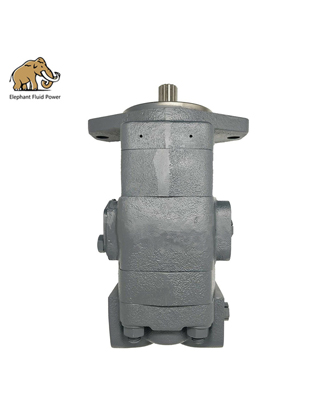
1. Gear pump: The meshing and separation of the gears are used to change the working volume, so as to realize the suction and discharge of hydraulic oil. The gear pump has a simple structure and is easy to manufacture and maintain, but the flow and pressure fluctuate greatly, making it suitable for low-pressure, low-flow hydraulic systems.
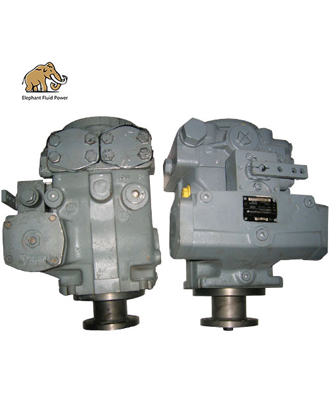
2. Piston pump: The working volume is changed by the reciprocating motion of the plunger in the cylinder, which has the characteristics of high pressure, large flow and high efficiency. The piston pump has a complex structure, but stable performance, and is suitable for high-pressure, high-flow hydraulic systems.
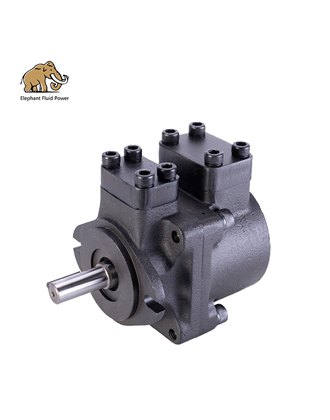
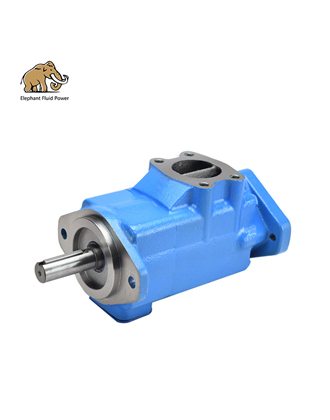
3. Vane pump: The rotation and sliding of the blades in the rotor groove are used to change the working volume, so as to realize the suction and discharge of hydraulic oil. The vane pump has the advantages of simple structure, small size, light weight and low noise, and is suitable for medium and low pressure, medium and small flow hydraulic systems.
In terms of structure, the main pump of the excavator is usually composed of the pump body, rotor, blades or plunger, distribution plate and other components. The material, machining accuracy and assembly quality of these components have a direct impact on the performance and service life of the pump.
The working principle of the main pump of the excavator mainly relies on the rotation of the rotor to drive the reciprocating motion of the blades or plunger, so as to change the working volume in the pump body and realize the suction and discharge of hydraulic oil. In the suction stage, the volume in the pump body increases, forming a negative pressure and sucking the hydraulic oil in; During the discharge phase, the volume in the pump body decreases, creating a positive pressure that discharges the hydraulic oil. By continuously sucking in and out the hydraulic oil, the excavator main pump provides continuous power for the various movements of the excavator.
1. High pressure and high efficiency: The main pump of the excavator usually has high working pressure and efficiency, which can meet the power needs of the excavator under complex working conditions.
2. Wear-resistant and durable: Critical components such as pump bodies, rotors, vanes, or plungers are usually manufactured with high-quality materials and have undergone precision machining and heat treatment for good wear resistance and durability.
3. Good sealing: The main pump of the excavator usually adopts advanced sealing technology, such as lip seal, gap seal, etc., to ensure the tightness of the hydraulic oil and prevent leakage and pollution.
4. Strong adaptability: The main pump of the excavator can adapt to different working environments and working conditions, such as high temperature, low temperature, humidity, dusty and other environments, as well as heavy load, shock, vibration and other working conditions.
The main pump of the excavator is widely used in various types of excavators to provide power for the bucket, boom, slewing and other actions of the excavator. During use, the main pump of the excavator needs to be checked and maintained regularly, including cleaning, lubrication, replacement of wear parts, etc., to ensure the normal operation of the pump and prolong the service life. At the same time, it is also necessary to pay attention to keeping the hydraulic system clean and dry to prevent hydraulic oil contamination and leakage.
Hydraulic pump for excavators
Excavator hydraulic pump types