French
Portuguese
Russian
German
Spanish
Japanese
Korean
Irish
Greek
Turkish
Italian
Danish
Romanian
Indonesian
Czech
Afrikaans
Swedish
Polish
Basque
Catalan
Esperanto
Hindi
Lao
Albanian
Amharic
Armenian
Azerbaijani
Belarusian
Bengali
Bosnian
Bulgarian
Cebuano
Chichewa
Corsican
Croatian
Dutch
Estonian
Filipino
Finnish
Frisian
Galician
Georgian
Gujarati
Haitian
Hausa
Hawaiian
Hebrew
Hmong
Hungarian
Icelandic
Igbo
Javanese
Kannada
Kazakh
Khmer
Kurdish
Kyrgyz
Latin
Latvian
Lithuanian
Luxembourg
Macedoniar
Malagasy
Malay
Malayalam
Maltese
Maori
Marathi
Mongolian
Burmese
Nepali
Norwegian
Pashto
Persian
Punjabi
Serbian
Sesotho
Sinhala
Slovak
Slovenian
Somali
Samoan
Scots Gaelic
Shona
Sindhi
Sundanese
Swahili
Tajik
Tamil
Telugu
Thai
Ukrainian
Urdu
Uzbek
Vietnamese
Welsh
Xhosa
Yiddish
Yoruba
Zulu
Pistons are durable and relatively simple devices. A basic plunger pump consists of a piston, a chamber, and two valves. The pump works by driving the piston down into the chamber, compressing the medium inside. In a hand pump, this is usually air. Once the pressure of the air exceeds the pressure of the outlet valve spring, the compressed medium will pass through the open outlet valve. When the piston is pulled back, it opens the inlet valve and closes the outlet valve, thereby using suction to draw in new medium for compression.
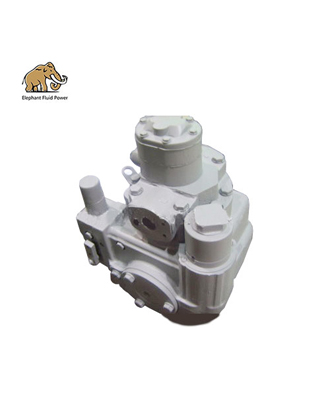
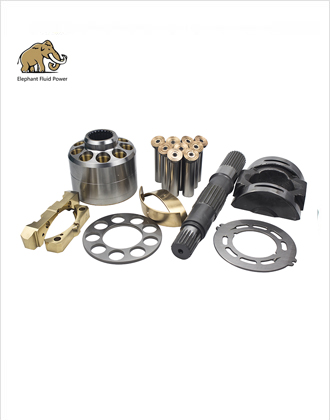
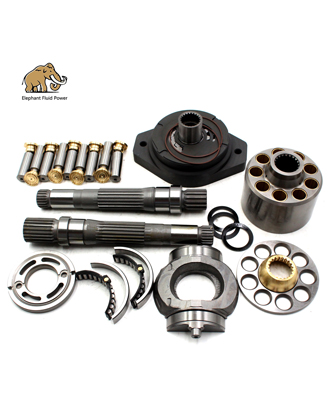
Although somewhat expensive, pistons are one of the most efficient types of pumps. Because they have pressure ratings up to 10,000 psi, they provide an excellent solution for many high pressure hydraulic oil pump applications. Although there are many types of pistons, because the hydraulic piston pump has the most advantages among all types of piston pumps, it stands out and becomes the most widely used piston pump. The hydraulic piston pump working principle is mainly that the hydraulic piston pump is powered by the hydraulic oil tank that supplies oil with air pressure. Therefore, after each startup of the machine, the hydraulic oil tank must reach the operating air pressure before operating the machine. The straight shaft swash plate piston pump is divided into two types: pressure oil supply type and self-priming oil type. Most of the pressure oil supply type hydraulic pumps use a fuel tank with air pressure, and some hydraulic pumps themselves have an oil charge sub-pump to provide pressure oil to the oil inlet of the hydraulic pump. The self-priming hydraulic pump has a strong self-priming ability and does not require external oil supply. There are many suppliers of plunger pumps, but there are only a handful of reliable manufacturers, and the Elephant brand is one of them. Here we show you the products of the Elephant Fluid Power brand. Such as K21E160HD1D/10W-VZI38800-S hydraulic piston pump, they use a bent shaft design. The swashplate design also features a variable displacement pump with an axial piston rotary group for hydrostatic drives in open circuits. If you look closely, its flow is proportional to drive speed and displacement. By adjusting different swashplate angles, the flow can be infinitely changed. The product is equipped with 2 drains. Has excellent suction performance. Elephants use technologies that make them quieter during use and have a longer lifespan and faster operating response. In-line drive is suitable for adding gear pumps and axial piston pumps of the same size, i.e. 100% in-line drive.
If you just need it, please directly click on the store website of Elephant Hydraulics https://elephant-power1.en.made-in-china.com/ to get the latest quotation information and look forward to your visit.
piston pump working principle pdf
rotary piston pump working principle
bent axis piston pump working principle
piston pump diagram
hydraulic pump working principle
piston pump parts and function
types of hydraulic piston pumps
hydraulic pump diagram