French
Portuguese
Russian
German
Spanish
Japanese
Korean
Irish
Greek
Turkish
Italian
Danish
Romanian
Indonesian
Czech
Afrikaans
Swedish
Polish
Basque
Catalan
Esperanto
Hindi
Lao
Albanian
Amharic
Armenian
Azerbaijani
Belarusian
Bengali
Bosnian
Bulgarian
Cebuano
Chichewa
Corsican
Croatian
Dutch
Estonian
Filipino
Finnish
Frisian
Galician
Georgian
Gujarati
Haitian
Hausa
Hawaiian
Hebrew
Hmong
Hungarian
Icelandic
Igbo
Javanese
Kannada
Kazakh
Khmer
Kurdish
Kyrgyz
Latin
Latvian
Lithuanian
Luxembourg
Macedoniar
Malagasy
Malay
Malayalam
Maltese
Maori
Marathi
Mongolian
Burmese
Nepali
Norwegian
Pashto
Persian
Punjabi
Serbian
Sesotho
Sinhala
Slovak
Slovenian
Somali
Samoan
Scots Gaelic
Shona
Sindhi
Sundanese
Swahili
Tajik
Tamil
Telugu
Thai
Ukrainian
Urdu
Uzbek
Vietnamese
Welsh
Xhosa
Yiddish
Yoruba
Zulu
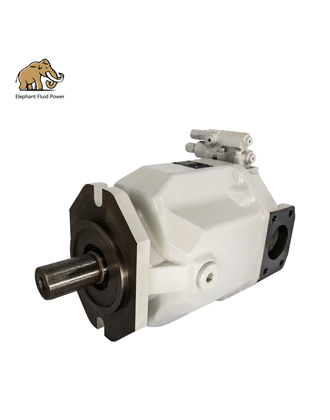
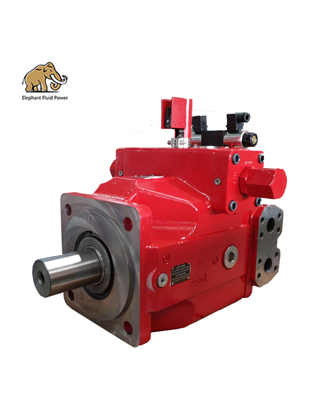
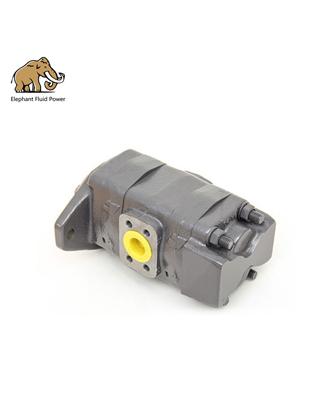
The hydraulic pump is mainly composed of the following parts:
First. Pump body
1. Function: It is the main structure of the hydraulic pump, providing installation support and protection for other components, and at the same time forming the flow channel and accommodating chamber of the hydraulic oil.
2. Features: Usually made of high-strength metal materials, with good sealing and pressure resistance, able to withstand high pressure in hydraulic systems.
Second. Plunger/gear/vane (according to different types of pumps)
1. Plunger (for piston pump): reciprocating motion in the cylinder body, by changing the volume of the working cavity to achieve oil suction and oil pressure. The plunger is usually made of high-strength alloy steel with a precision machined surface to ensure a good fit and tightness with the cylinder block.
2. Gears (for gear pumps): Gears that mesh with each other rotate inside the pump body to deliver hydraulic oil from the suction port to the pressure port. The gears are generally made of high-quality alloy steel, which has high hardness and wear resistance.
3. Vane (for vane pump): Installed in the rotor groove, with the rotation of the rotor, the blades are stretched out under the action of centrifugal force and pressure oil, and are close to the inner surface of the stator to form a plurality of sealed working cavities. Blades are usually made of wear-resistant materials such as high-speed steel or ceramic.
Third. Distribution device
1. Function: Responsible for distributing the inflow and outflow of hydraulic oil to ensure the normal operation of the hydraulic pump. For piston pumps, the distribution tray is a common distribution device; In the case of gear pumps and vane pumps, the distribution is usually achieved through a specific structure on the pump body.
2. Features: The distribution device needs to have good sealing and wear resistance to prevent hydraulic oil leakage and ensure long-term stable operation.
Fourth, the drive shaft
1. Function: Connect the hydraulic pump to the power source (such as an engine or electric motor) to transmit power to the internal parts of the pump so that they can operate.
2. Features: The drive shaft is usually made of high-strength alloy steel, which has enough strength and rigidity to withstand the transmitted torque and power.
Fifth. Seals
1. Function: Prevent hydraulic oil leakage and ensure stable pressure and flow inside the hydraulic pump. Seals include shaft seals, sealing rings, etc., which are installed in different parts of the pump.
2. Features: Seals need to have good elasticity, wear resistance and corrosion resistance, and be able to adapt to different working temperature and pressure conditions.
Sixth. Bearings
1. Function: Support the drive shaft and other rotating parts, reduce friction and wear, and ensure the smooth operation of the pump.
2. Features: The bearings are usually rolling bearings or sliding bearings, which have the characteristics of high load capacity, low friction coefficient and long life.
The above is the introduction of hydraulic pump parts, I hope it will help you.
Hydraulic pump parts list
Hydraulic pump replacement parts
Mechanical hydraulic pump parts