French
Portuguese
Russian
German
Spanish
Japanese
Korean
Irish
Greek
Turkish
Italian
Danish
Romanian
Indonesian
Czech
Afrikaans
Swedish
Polish
Basque
Catalan
Esperanto
Hindi
Lao
Albanian
Amharic
Armenian
Azerbaijani
Belarusian
Bengali
Bosnian
Bulgarian
Cebuano
Chichewa
Corsican
Croatian
Dutch
Estonian
Filipino
Finnish
Frisian
Galician
Georgian
Gujarati
Haitian
Hausa
Hawaiian
Hebrew
Hmong
Hungarian
Icelandic
Igbo
Javanese
Kannada
Kazakh
Khmer
Kurdish
Kyrgyz
Latin
Latvian
Lithuanian
Luxembourg
Macedoniar
Malagasy
Malay
Malayalam
Maltese
Maori
Marathi
Mongolian
Burmese
Nepali
Norwegian
Pashto
Persian
Punjabi
Serbian
Sesotho
Sinhala
Slovak
Slovenian
Somali
Samoan
Scots Gaelic
Shona
Sindhi
Sundanese
Swahili
Tajik
Tamil
Telugu
Thai
Ukrainian
Urdu
Uzbek
Vietnamese
Welsh
Xhosa
Yiddish
Yoruba
Zulu
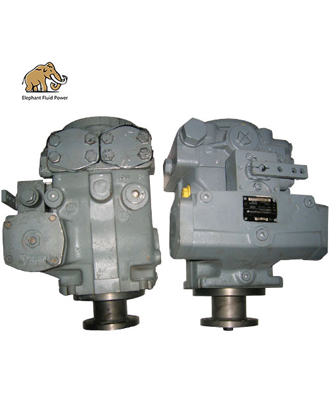
The K3V hydraulic pump is a series of axial piston hydraulic pumps manufactured by Kawasaki, widely used in the field of construction machinery.
A hydraulic pump is a mechanical power source that converts mechanical energy into hydraulic energy, and the K3V hydraulic pump is no exception. When it operates, a vacuum forms at the pump inlet, creating a force that draws fluid from the reservoir through the inlet line into the pump. Subsequently, the pump mechanically conveys this fluid to the outlet, pressurizing it into the hydraulic system. During this process, the generated flow possesses sufficient force to overcome the pressure created by the load at the pump outlet.
1. Variable Capacity Function: The K3V pump features variable displacement capability. It can automatically or manually adjust the pump's displacement volume based on changes in workload and operating conditions to achieve different flow outputs. This not only enhances energy efficiency but also ensures stable equipment performance across diverse operating conditions.
2. Compact Design: Featuring a compact structure, small footprint, and lightweight construction, it facilitates installation and placement on machinery like construction equipment, making it particularly suitable for applications with limited space requirements.
3. High Pressure and High Speed Capability: Capable of withstanding elevated operating pressures and rotational speeds, it meets the demands of hydraulic systems in heavy-duty, high-speed construction machinery operations, delivering robust power support.
4. Excellent Suction Performance: Features outstanding suction characteristics, ensuring stable oil supply under varying conditions, reducing cavitation occurrence, and enhancing pump reliability and service life.
5. Low-Noise Operation: Generates minimal operational noise, improving the working environment and reducing noise impact on operators.
1. K3V63: Frequently used in small and medium-sized excavators, loaders, and other construction machinery. Suitable for excavator models such as R150-7, EC140, SY135-8, DH150-7, and TB135.
2. K3V112: Commonly found in excavators around 20 tons. Models like K3V112DT serve as hydraulic pumps for 20-ton excavators and can also be used in hydraulic systems of some medium-sized construction machinery.
3. K3V140 and K3V180: Typically applied in large excavators and other heavy-duty construction machinery to meet their requirements for high flow rates and pressure.
1. Noise Generation
Causes: Suction line compression or clogged suction filter; loose suction line fittings allowing air ingestion; excessive hydraulic oil viscosity causing cavitation noise; pump wear producing abnormal sounds.
Repair Methods: Clean or replace suction filter; retighten fittings; Replace with hydraulic oil of appropriate viscosity; inspect and repair the hydraulic pump.
2. Insufficient Displacement, Slow Excavator Speed
Causes: Engine speed fails to meet requirements; hydraulic oil viscosity too low, temperature too high, or oil level too low; improper adjustment of the hydraulic pump regulator; internal pump wear (e.g., excessive clearance between pistons and cylinder block, or between distributor plate and components) leading to increased leakage.
Repair Methods: Check and adjust engine speed; replace with high-quality or appropriately viscous hydraulic oil, replenish insufficient oil; readjust hydraulic pump regulator; disassemble hydraulic pump, inspect worn components and repair or replace.
3. No Pressure or Oil Suction Failure
Causes: Hydraulic pump rotation direction inconsistent with prime mover; hydraulic pump drive key dislodged; Incorrect inlet/outlet port connections; Oil level in tank too low, causing suction pipe to protrude above liquid surface; Excessively high oil viscosity in pump hindering blade rotation.
Repair Method: Correct prime mover rotation direction; Reinstall hydraulic pump drive key; Reconnect inlet/outlet ports per manual specifications; Refill system oil to ensure level exceeds minimum mark; Select working oil with appropriate viscosity.
Kawasaki K3VI pump
Swash plate pump K5V