French
Portuguese
Russian
German
Spanish
Japanese
Korean
Irish
Greek
Turkish
Italian
Danish
Romanian
Indonesian
Czech
Afrikaans
Swedish
Polish
Basque
Catalan
Esperanto
Hindi
Lao
Albanian
Amharic
Armenian
Azerbaijani
Belarusian
Bengali
Bosnian
Bulgarian
Cebuano
Chichewa
Corsican
Croatian
Dutch
Estonian
Filipino
Finnish
Frisian
Galician
Georgian
Gujarati
Haitian
Hausa
Hawaiian
Hebrew
Hmong
Hungarian
Icelandic
Igbo
Javanese
Kannada
Kazakh
Khmer
Kurdish
Kyrgyz
Latin
Latvian
Lithuanian
Luxembourg
Macedoniar
Malagasy
Malay
Malayalam
Maltese
Maori
Marathi
Mongolian
Burmese
Nepali
Norwegian
Pashto
Persian
Punjabi
Serbian
Sesotho
Sinhala
Slovak
Slovenian
Somali
Samoan
Scots Gaelic
Shona
Sindhi
Sundanese
Swahili
Tajik
Tamil
Telugu
Thai
Ukrainian
Urdu
Uzbek
Vietnamese
Welsh
Xhosa
Yiddish
Yoruba
Zulu
In the world of engineering machinery, the hydraulic piston pump is a crucial component. It is akin to the "heart" of the equipment, providing power for various actions. To ensure the efficient operation of the equipment, it is vital to understand the usage and maintenance methods of hydraulic piston pump parts.
First, let's focus on the form of oil supply. Axial piston pumps are divided into two types: pressure oil supply and self-priming. For pressure oil supply hydraulic pumps, an air pressure oil tank is a common configuration, while some hydraulic pumps are equipped with a make-up pump to provide oil pressure at the inlet. Self-priming hydraulic pumps rely on their strong self-priming ability without the need for external oil supply.
During use, for hydraulic oil tanks that rely on air pressure to supply oil, the machine must be started and the hydraulic oil tank must reach the operating pressure before operating the machinery. Operating with insufficient air pressure may cause the sliding whip in the hydraulic pump to disengage, leading to abnormal wear of the return plate and pressure plate inside the pump. For piston pumps that use a make-up pump for oil supply, operators should check the pump 1-2 times daily to ensure the hydraulic pump's operating sound is normal. If the speed of the hydraulic cylinder decreases or the machine stalls, the make-up pump should be disassembled and inspected for scratches on the impeller edges or excessive internal gear pump clearance.
For self-priming piston pumps, the oil level in the hydraulic oil tank should not be lower than the minimum oil mark to maintain adequate hydraulic oil. Additionally, the cleanliness of the hydraulic oil directly affects the lifespan of hydraulic piston pump parts.
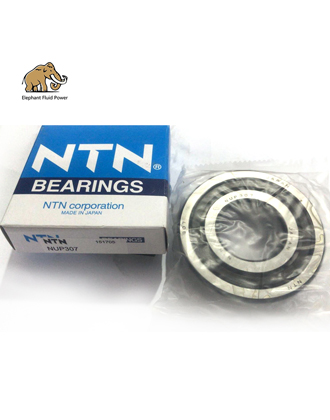
Next, let's focus on a key component of hydraulic pumps: bearings. The average lifespan of bearings is 10,000 hours. Once this value is exceeded, they need to be replaced. When disassembling bearings without professional testing equipment, visual inspection can be used. If scratches or discoloration are found on the roller surface, the bearing must be replaced promptly. When replacing bearings, note the English letters and model of the original bearing and try to purchase products from the original manufacturer and specifications. If replacing with other brands, consult experienced personnel for a compatibility chart to ensure the bearing's precision grade and load capacity.
The repair of the piston rod and cylinder hole, slipper and swashplate, and distribution plate and cylinder distribution surface requires professional techniques and methods. During the repair process, strictly follow the standards to ensure that the repaired hydraulic piston pump parts can restore their original performance and precision.
In summary, the use and maintenance of hydraulic piston pumps in engineering machinery are key to ensuring the equipment operates normally. Correct use and maintenance can extend the lifespan of hydraulic piston pump parts and improve equipment reliability and work efficiency. Additionally, during maintenance, it is important to choose professional repair personnel and high-quality parts to ensure repair quality and equipment safety. The maintenance and upkeep of hydraulic piston pump parts are not only related to the lifespan of individual components but also directly impact the operating state and efficiency of the entire equipment.