French
Portuguese
Russian
German
Spanish
Japanese
Korean
Irish
Greek
Turkish
Italian
Danish
Romanian
Indonesian
Czech
Afrikaans
Swedish
Polish
Basque
Catalan
Esperanto
Hindi
Lao
Albanian
Amharic
Armenian
Azerbaijani
Belarusian
Bengali
Bosnian
Bulgarian
Cebuano
Chichewa
Corsican
Croatian
Dutch
Estonian
Filipino
Finnish
Frisian
Galician
Georgian
Gujarati
Haitian
Hausa
Hawaiian
Hebrew
Hmong
Hungarian
Icelandic
Igbo
Javanese
Kannada
Kazakh
Khmer
Kurdish
Kyrgyz
Latin
Latvian
Lithuanian
Luxembourg
Macedoniar
Malagasy
Malay
Malayalam
Maltese
Maori
Marathi
Mongolian
Burmese
Nepali
Norwegian
Pashto
Persian
Punjabi
Serbian
Sesotho
Sinhala
Slovak
Slovenian
Somali
Samoan
Scots Gaelic
Shona
Sindhi
Sundanese
Swahili
Tajik
Tamil
Telugu
Thai
Ukrainian
Urdu
Uzbek
Vietnamese
Welsh
Xhosa
Yiddish
Yoruba
Zulu
The hydraulic direction control valve is a valve that controls the direction of oil flow in the hydraulic system, and controls the reversing, starting and stopping of the actuator by controlling the on-off of the oil in the oil circuit. Unlike flow valves and pressure valves, flow valves and pressure valves regulate the parameters of the system, while directional valves directly control the load. Today Elephant Fluid Power will introduce you to the knowledge of hydraulic directional control valves.
Some people compare the hydraulic directional control valve to "four or two jacks", that is, only a small force is needed to toggle the handle of the reversing valve to control a very heavy load. For example, excavators, loaders, truck cranes, etc., are controlled by joysticks to control each group of actions, this type of machinery is characterized by complex working conditions, requires delicate operation, and requires compound actions. Other machinery such as machine tools, sanitation equipment, etc. control the electromagnetic reversing valve through the button on the panel or remote control for action switching, which requires accurate positioning.
1. Classification of hydraulic directional control valves
(1) According to the functional classification, hydraulic directional control valves include check valves and directional valves. Check valves and directional valves come in many different forms. Check valves include ordinary check valves and hydraulic check valves, hydraulic check valves can be used as filling valves, and two hydraulic check valves can be combined into hydraulic locks. Directional valves are divided into manual directional valves, hydraulic directional valves, electromagnetic directional valves, electro-hydraulic directional valves, etc. according to the control mode. Multiple directional valves can be combined into multi-way valves that can manipulate multiple sets of actions. The following figure shows the classification of directional valves.
(2) According to the structural form of the valve core, it can be divided into: spool valve, poppet valve, ball valve and other forms. Check valves are usually ball valves or poppet valves, and most of the directional valves are spool valve structures, and there are also ball valves, rotary valves and other structural forms.
2. The working principle of the reversing valve
The directional valve is made axial movement in the valve body through the spool, so that the corresponding oil circuit is connected or disconnected. There are multiple sinking grooves in the valve body, which are connected to the outside through the orifice, and there are multiple steps on the valve core. The directional valve is switched by changing the connection between the steps on the spool and the sinking groove on the valve body.
3. "Position" and "Pass" of the reversing valve
Many non-professional people are not very clear about the concept of "bit" and "through" of the reversing valve, in fact, it is very simple, and it can be understood directly from the literal meaning: "bit" represents the working position of the reversing valve, there are several working states There are several "bits", and "through" represents the number of orifices connected to the outside. Such as a three-position four-way valve, there are three working positions, four oil ports. The following figure shows the structural principle of common directional valves and their symbolic representation.
4 Neutral function of directional valve
The so-called "function" refers to the connection state of the directional valve, and the "median function" refers to the connected state of each oil port when the three-position reversing valve is in the neutral position. When designing hydraulic systems, the selection of the neutral function of the directional valve is very important, which has a direct impact on the system principle.
If you need to buy a hydraulic directional control valve, choose a reputable manufacturing company, such as Elephant Fluid Power. Elephant Fluid Power is a professional hydraulic products production company, their customers are all over the world more than 30 countries, many are customers who have cooperated many times, because Elephant Fluid Power has high product quality, affordable price and excellent service, so it can attract customers to cooperate many times.
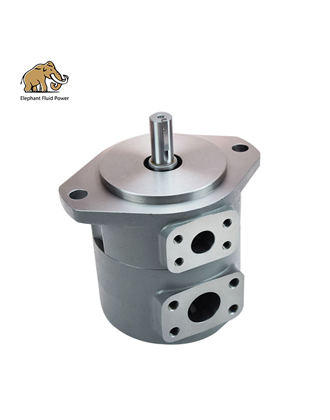
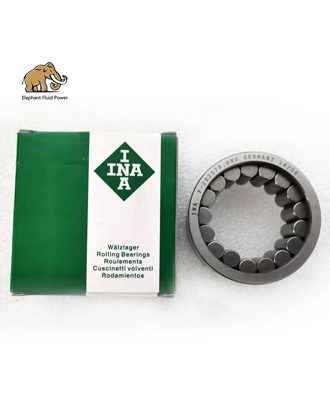
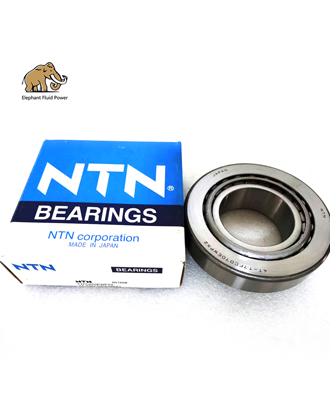
In addition to directional control valves, Elephant Fluid Power also produces matching parts, which can be used for the maintenance of hydraulic products, 100% suitable for the original, and good quality, long service life, the same price is cheap, convenient for the use and maintenance of later products. Elephant Fluid Power ships quickly, usually in three to seven days, and all couriers are packaged in three layers of protective packaging to ensure that the goods you receive are in perfect condition to the greatest extent. If you are interested, please contact us.
understanding hydraulic control valves
hydraulic pressure control valves types
hydraulic valves explained
directional control valve basics