French
Portuguese
Russian
German
Spanish
Japanese
Korean
Irish
Greek
Turkish
Italian
Danish
Romanian
Indonesian
Czech
Afrikaans
Swedish
Polish
Basque
Catalan
Esperanto
Hindi
Lao
Albanian
Amharic
Armenian
Azerbaijani
Belarusian
Bengali
Bosnian
Bulgarian
Cebuano
Chichewa
Corsican
Croatian
Dutch
Estonian
Filipino
Finnish
Frisian
Galician
Georgian
Gujarati
Haitian
Hausa
Hawaiian
Hebrew
Hmong
Hungarian
Icelandic
Igbo
Javanese
Kannada
Kazakh
Khmer
Kurdish
Kyrgyz
Latin
Latvian
Lithuanian
Luxembourg
Macedoniar
Malagasy
Malay
Malayalam
Maltese
Maori
Marathi
Mongolian
Burmese
Nepali
Norwegian
Pashto
Persian
Punjabi
Serbian
Sesotho
Sinhala
Slovak
Slovenian
Somali
Samoan
Scots Gaelic
Shona
Sindhi
Sundanese
Swahili
Tajik
Tamil
Telugu
Thai
Ukrainian
Urdu
Uzbek
Vietnamese
Welsh
Xhosa
Yiddish
Yoruba
Zulu
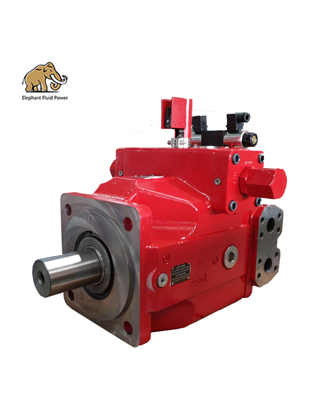
In various industries and applications, the role of small hydraulic piston pumps cannot be understated. These compact yet powerful devices serve as the driving force behind many mechanical operations, offering precision and efficiency in a small package. In this blog, we will delve into the world of small hydraulic piston pumps, exploring their features, applications, and benefits.
The compact size of small hydraulic piston pumps allows them to be easily integrated into tight spaces, where larger pumps may not be suitable. This advantage is particularly important in applications where space is limited or where mobility is a priority. Don't let their size fool you; small hydraulic piston pumps can generate impressive power. Their high power density makes them ideal for applications that demand significant force within a limited space. Small hydraulic piston pumps offer precise control over flow rates and pressures. This level of control is crucial in applications that require accurate and controlled movements, such as robotics, medical equipment, and precision machinery. Due to their precise control capabilities and the ability to match output with demand, small hydraulic piston pumps can be highly energy-efficient. This efficiency not only reduces operating costs but also contributes to a smaller environmental footprint.
In the medical field, precision is paramount. Small hydraulic piston pumps are used in medical devices such as patient lifts, surgical tables, and diagnostic equipment, ensuring accurate and controlled movements that are essential for patient care. Small hydraulic piston pumps are used in small-scale material handling equipment like compact forklifts, scissor lifts, and conveyor systems. Their ability to generate significant force in confined spaces makes them ideal for these applications. The aerospace and defense industries rely on small hydraulic piston pumps to power various systems, such as landing gear, flight control surfaces, and weapon systems. Their compactness and high power output are critical in these demanding environments. In the automotive industry, small hydraulic piston pumps are utilized in power steering systems, convertible tops, and braking systems. These pumps ensure smooth and precise operation in vehicles of all sizes.
Advances in manufacturing and materials have enabled the creation of even smaller hydraulic piston pumps without compromising performance. These miniature pumps are ideal for applications where space is at a premium. Small hydraulic piston pumps are being integrated into smart systems that utilize sensors and electronics for enhanced control and monitoring. This integration allows for real-time adjustments, predictive maintenance, and data-driven insights. In line with global efforts towards sustainability, some small hydraulic piston pumps now feature eco-friendly designs. These pumps prioritize energy efficiency, reduce emissions, and use biodegradable hydraulic fluids.
Small hydraulic piston pumps prove that size is not a limitation when it comes to delivering power, precision, and efficiency. From medical equipment to aerospace systems, their compact design and versatile capabilities make them essential components in a wide array of industries. As technology continues to advance, we can expect even more innovations that will further elevate the performance and applications of these small powerhouses in the world of hydraulics.