French
Portuguese
Russian
German
Spanish
Japanese
Korean
Irish
Greek
Turkish
Italian
Danish
Romanian
Indonesian
Czech
Afrikaans
Swedish
Polish
Basque
Catalan
Esperanto
Hindi
Lao
Albanian
Amharic
Armenian
Azerbaijani
Belarusian
Bengali
Bosnian
Bulgarian
Cebuano
Chichewa
Corsican
Croatian
Dutch
Estonian
Filipino
Finnish
Frisian
Galician
Georgian
Gujarati
Haitian
Hausa
Hawaiian
Hebrew
Hmong
Hungarian
Icelandic
Igbo
Javanese
Kannada
Kazakh
Khmer
Kurdish
Kyrgyz
Latin
Latvian
Lithuanian
Luxembourg
Macedoniar
Malagasy
Malay
Malayalam
Maltese
Maori
Marathi
Mongolian
Burmese
Nepali
Norwegian
Pashto
Persian
Punjabi
Serbian
Sesotho
Sinhala
Slovak
Slovenian
Somali
Samoan
Scots Gaelic
Shona
Sindhi
Sundanese
Swahili
Tajik
Tamil
Telugu
Thai
Ukrainian
Urdu
Uzbek
Vietnamese
Welsh
Xhosa
Yiddish
Yoruba
Zulu
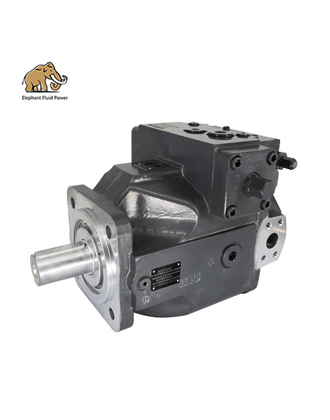
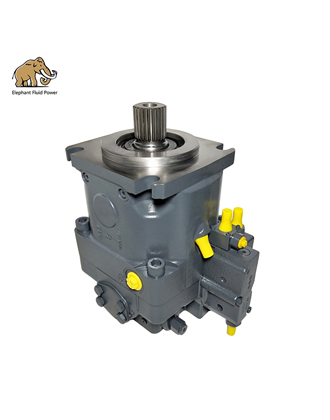
Before discussing this issue, I would like to first explain why hydraulic pumps are needed on tractors. A hydraulic pump is a mechanical device used to move fluids. It works by using the pressure of the fluid being pumped to create a rotating motion. This motion is then used to power other mechanical devices, like a tractor. The main use for a hydraulic pump on a tractor is to move liquid or gas. This is especially useful in agriculture, where large amounts of water or gas are needed frequently. Hydraulic pumps also come in handy when working with heavy equipment, like trucks and bulldozers.
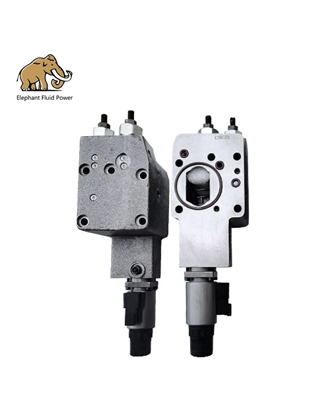
The hydraulic pump is located on the front of the tractor near the engine. It uses pressurized fluid to power various operations, including turning gears and moving heavy objects. The hydraulic system consists of a pump and valves that allow the operator to transfer fluid power from the tractor’s engine to various implements, such as the plow or disc harrow. If you’re looking to repair or replace a hydraulic pump on a tractor, you’ll firstly need to identify the part number and find the right tractor model for instruction. In this way, the hydraulic pump position can be found according to the tractor model. If you are not clear about the tractor model, in general, the hydraulic system is located in the tractor’s engine compartment. The pump turns on and off with the engine, providing pressure to drive the valves. Fluid enters the pump through an intake manifold and passes through a series of screens and strainer before exiting the pump outlet. Furthermore, the hydraulic system can be divided into two sections: the prime mover (the engine) and the driven units (the implements). The prime mover is responsible for generating pressure, while the driven units are responsible for receiving that pressure and using it to do work.
To sum up, a tractor’s hydraulic system is crucial to its operation. In order the tractor’s hydraulic system to function properly, it needs to be calibrated regularly. Calibration consists of adjusting the valves so that they open and close at exactly the right moment. This ensures that the system is working properly and is delivering the correct amount of pressure to the driven units.
If you don't know how to find the hydraulic pump on a tractor, don't know how to calibrate it regularly, or don’t know how to replace or repair your hydraulic pump. We have professional technicians 24h online, Elephant Fluid Power has many professionals willing to serve you , and professionally deal with every customer's problem. Welcome to contact us!
ford tractor hydraulic pump
ford tractor hydraulic control valve
tractor hydraulic pump repair near me
how to prime ford tractor hydraulic pump
ford 2000 hydraulic pump rebuild kit
how to replace hydraulic pump on tractor
ford 600 tractor hydraulic diagram
ford 2000 hydraulic pump prime