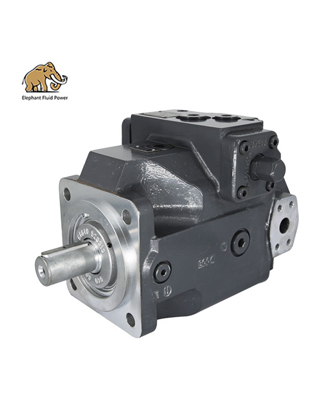
After many factories replace their A10VSO hydraulic pumps with new ones—even though the equipment models match and the specifications appear to be correct—minor issues such as unusual noises, rapid temperature rise, unstable pressure, and sluggish response often arise shortly after installation. In fact, the vast majority of failures in new units are not due to product quality issues, but rather to early wear caused by improper installation and inadequate initial commissioning. As a commonly used variable-displacement piston pump in industrial applications, the A10VSO features internal friction pairs and control spools of extremely high precision. It imposes strict requirements on installation alignment, piping connections, no-load startup, and parameter calibration. Only by following standard operating procedures can the pump’s stability and energy-saving advantages be fully realized.
Let’s first discuss the key details of the initial installation—which is also the stage where errors are most likely to occur. When installing the pump body, the coupling must be precisely aligned; there must be no eccentricity or tilt. Excessive coaxiality deviation will cause continuous vibration during operation, directly damaging the internal pistons and bearings. Mounting bolts must be tightened evenly in a diagonal pattern; never tighten them on one side only, to prevent deformation of the pump housing due to uneven stress. Additionally, the rotation direction must be verified carefully; the 31R clockwise-rotating model must match the equipment’s rotation direction. Installing it in the wrong direction will not only prevent pressure buildup but will also directly damage the internal precision components.
Piping layout and hydraulic connections are the foundation for ensuring the pump’s long-term operation. The A10VSO is highly sensitive to suction resistance; the suction line must not be too long, there must not be too many bends, and the piping seals must be airtight to prevent air ingress. Even a slight air ingress into the lines will result in operational screeching, pressure fluctuations, and foaming in the system. There are also specific guidelines for the drain port connection: it must be connected directly and independently to the tank; it must not be connected in parallel with the pressure line or restricted by a throttle. Otherwise, excessive internal pressure in the housing will force the seals out of position, causing continuous seepage and premature oil leaks. After installation is complete, be sure to fill the pump housing with filtered hydraulic oil in advance. This step is intended to prevent wear caused by dry running during initial operation. Many technicians skip this step and start the machine directly for testing, which can easily cause damage to the distribution plate.
The initial no-load test run is a critical step in commissioning a new pump. After verifying that all piping is correct, do not operate the pump under load immediately. First, briefly activate the motor to ensure smooth operation, then run it at low speed without a load for 3 to 5 minutes. This period is primarily intended to purge residual air from the system. Monitor the pump’s operating noise and oil temperature; under normal conditions, operation should be low-pitched and steady, with no abnormal noises or vibrations. If a sharp, unusual noise occurs, shut down the machine immediately to investigate—it is highly likely that air has not been fully purged or that there is a blockage in the piping. Resume operation only after the issue has been resolved.
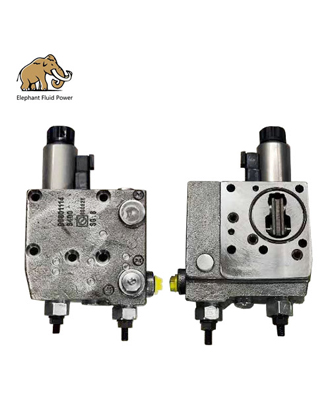
Once no-load operation has stabilized, proceed with precise pressure and functional commissioning. For models with combined flow and pressure control, such as the DFR and DFR1, the commissioning sequence is critical: first set the system pressure cutoff value, then adjust the load-sensing response parameters accordingly. Never set the pressure to the maximum level all at once. It is recommended to increase pressure in stages and stabilize it step by step, pausing briefly at each pressure level to observe pressure stability and flow response speed. Many people, seeking to save time, perform commissioning at full pressure directly. This can lead to overloading of the control spring and jamming of the variable mechanism, resulting in issues such as pressure maintenance overflow and excessive energy consumption later on.
Elephant Fluid Power has been deeply rooted in the hydraulic industry for twenty years, specializing in the immediate supply of the full range of brand-new A10VSO hydraulic pumps. We fully understand the importance of proper installation and commissioning for equipment lifespan. Every A10VSO unit we supply undergoes rigorous bench testing before leaving the factory. Pressure accuracy, flow response, and variable control are all calibrated to meet standards, ensuring performance that fully aligns with industrial operating conditions. We also provide standardized installation and commissioning guidelines to help customers avoid common operational pitfalls, ensuring new units run stably from the moment they are installed.
Many standard pumps on the market lack sufficient precision, are not calibrated before shipment, and have a low margin for error—resulting in frequent malfunctions even with minor operational mishandling. Elephant Fluid Power’s A10VSO series features core precision components made from robust materials, manufactured with high precision and assembled to stringent standards. Not only does this ensure stable hardware quality, but it also enables the pumps to adapt to continuous operation in various machine tools, hydraulic power units, and automated equipment, offering far superior fault tolerance and service life compared to standard alternatives.
Proper installation and commissioning are key to extending the service life of hydraulic pumps and reducing equipment operation and maintenance costs. To purchase high-quality, reliable A10VSO hydraulic pumps across the entire product line and obtain comprehensive standard procedures for installation and commissioning, as well as guidance on operating condition compatibility, please visit our official website.
a10vso pump
a10vo Rexroth pdf
a10vso data sheet
a10vso spec sheet
a10vso 10 pdf
a10vso18
bosch a10vso spec sheet
a10vso18 pdf
 French
 Portuguese
 Russian
 German
 Spanish
 Japanese
 Korean
 Irish
 Greek
 Turkish
 Italian
 Danish
 Romanian
 Indonesian
 Czech
 Afrikaans
 Swedish
 Polish
 Basque
 Catalan
 Esperanto
 Hindi
 Lao
 Albanian
 Armenian
 Azerbaijani
 Belarusian
 Bengali
 Bosnian
 Bulgarian
 Cebuano
 Chichewa
 Croatian
 Dutch
 Estonian
 Finnish
 Galician
 Georgian
 Haitian
 Hebrew
 Hmong
 Hungarian
 Icelandic
 Javanese
 Kazakh
 Khmer
 Latin
 Latvian
 Lithuanian
 Luxembourg
 Macedoniar
 Malagasy
 Malay
 Maltese
 Maori
 Mongolian
 Burmese
 Nepali
 Norwegian
 Pashto
 Persian
 Punjabi
 Serbian
 Sinhala
 Slovak
 Slovenian
 Somali
 Samoan
 Tajik
 Thai
 Ukrainian
 Uzbek
 Vietnamese
 Welsh
 Yiddish
 Yoruba