French
Portuguese
Russian
German
Spanish
Japanese
Korean
Irish
Greek
Turkish
Italian
Danish
Romanian
Indonesian
Czech
Afrikaans
Swedish
Polish
Basque
Catalan
Esperanto
Hindi
Lao
Albanian
Amharic
Armenian
Azerbaijani
Belarusian
Bengali
Bosnian
Bulgarian
Cebuano
Chichewa
Corsican
Croatian
Dutch
Estonian
Filipino
Finnish
Frisian
Galician
Georgian
Gujarati
Haitian
Hausa
Hawaiian
Hebrew
Hmong
Hungarian
Icelandic
Igbo
Javanese
Kannada
Kazakh
Khmer
Kurdish
Kyrgyz
Latin
Latvian
Lithuanian
Luxembourg
Macedoniar
Malagasy
Malay
Malayalam
Maltese
Maori
Marathi
Mongolian
Burmese
Nepali
Norwegian
Pashto
Persian
Punjabi
Serbian
Sesotho
Sinhala
Slovak
Slovenian
Somali
Samoan
Scots Gaelic
Shona
Sindhi
Sundanese
Swahili
Tajik
Tamil
Telugu
Thai
Ukrainian
Urdu
Uzbek
Vietnamese
Welsh
Xhosa
Yiddish
Yoruba
Zulu
Today, I will introduce you to some relevant knowledge about components of hydraulic drive. We all know that hydraulic transmission is a hydraulic system composed of hydraulic pump, hydraulic control valve, hydraulic actuator (hydraulic cylinder and hydraulic motor, etc.) and hydraulic accessories (pipeline, accumulator, etc.). The hydraulic pump converts the mechanical energy into the pressure energy of the liquid, the hydraulic control valve and the hydraulic accessories control the pressure, flow and flow direction of the hydraulic medium, and the pressure energy output by the hydraulic pump is transmitted to the actuator, and the actuator converts the liquid pressure energy into mechanical energy to complete the required action. The standard hydraulic drive system consists of the following parts:
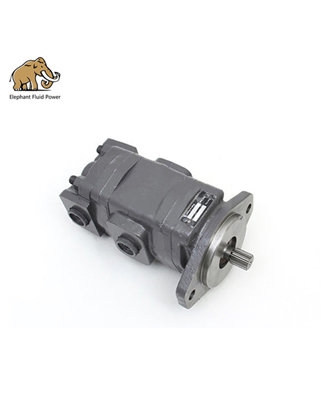
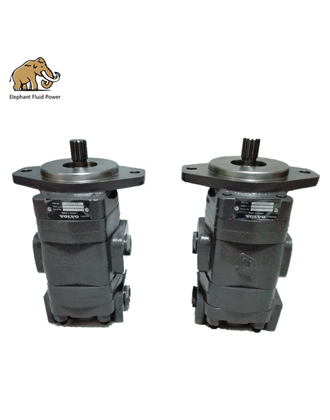
The power element, that is, the hydraulic pump, its function is to convert the mechanical energy of the prime mover into the pressure kinetic energy of the liquid (manifested as pressure and flow), and its function is to provide pressure oil for the hydraulic system and is the power source of the system.
Actuator, refers to the hydraulic cylinder or hydraulic motor, its function is to convert hydraulic energy into mechanical energy and do external work, the hydraulic cylinder can drive the working mechanism to achieve reciprocating linear movement (or swing), hydraulic motor can complete the rotary movement.
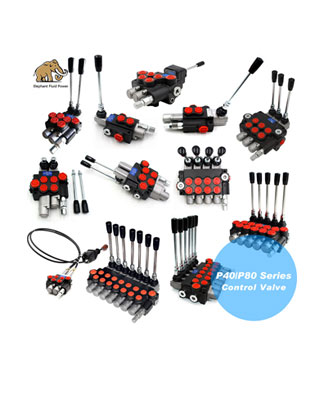
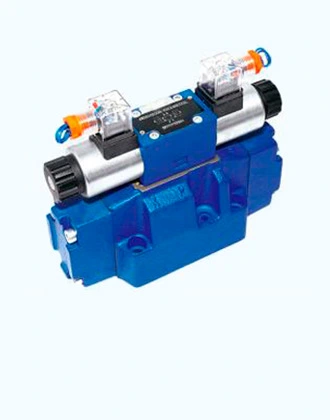
Control components, which refer to various valves that can control and adjust the pressure, flow and direction of the liquid in the hydraulic system to ensure that the actuators can work according to people's expected requirements.
Auxiliary components, including oil tank, oil filter, pipeline and joint, cooler, pressure gauge, etc. Their role is to provide the necessary conditions for the system to work properly and facilitate monitoring and control.
The working medium, that is, the transmission liquid, is usually called hydraulic oil. The hydraulic system realizes movement and power transmission through the working medium, and the hydraulic oil can also lubricate the parts that move with each other in the hydraulic components.
We Elephant Fluid Power is a professional manufacturer and distributor of hydraulic components, our hydraulic components are not only strong, long service life, but also compared with major hydraulic brands, its cost performance is also extremely advantageous. Elephant Fluid Power has dozens of standard parts and seal production workshops, and cooperates with the best non-ferrous metal suppliers in China, and is able to provide more complete varieties and models than other companies, committed to providing users with high-quality products, complete solutions and first-class technical services, Create the most complete system services for customers. Elephant fluid power, worthy of your trust!
Hydraulic system
components of hydraulic system in aircraft
Hydraulic pump
Industrial applications of hydraulic system
Hydraulic cylinder
Hydraulic jack
Hydraulic hose
what is hydraulic system