French
Portuguese
Russian
German
Spanish
Japanese
Korean
Irish
Greek
Turkish
Italian
Danish
Romanian
Indonesian
Czech
Afrikaans
Swedish
Polish
Basque
Catalan
Esperanto
Hindi
Lao
Albanian
Amharic
Armenian
Azerbaijani
Belarusian
Bengali
Bosnian
Bulgarian
Cebuano
Chichewa
Corsican
Croatian
Dutch
Estonian
Filipino
Finnish
Frisian
Galician
Georgian
Gujarati
Haitian
Hausa
Hawaiian
Hebrew
Hmong
Hungarian
Icelandic
Igbo
Javanese
Kannada
Kazakh
Khmer
Kurdish
Kyrgyz
Latin
Latvian
Lithuanian
Luxembourg
Macedoniar
Malagasy
Malay
Malayalam
Maltese
Maori
Marathi
Mongolian
Burmese
Nepali
Norwegian
Pashto
Persian
Punjabi
Serbian
Sesotho
Sinhala
Slovak
Slovenian
Somali
Samoan
Scots Gaelic
Shona
Sindhi
Sundanese
Swahili
Tajik
Tamil
Telugu
Thai
Ukrainian
Urdu
Uzbek
Vietnamese
Welsh
Xhosa
Yiddish
Yoruba
Zulu
First, Core Definitions and Classification
The hydraulic pump serves as the power core of an excavator's hydraulic system, converting the engine's mechanical energy into hydraulic pressure energy to drive actuators such as the boom, bucket, and travel motors. Current mainstream pump types can be categorized into four classes based on operating principles: gear pumps, vane pumps, piston pumps, and variable displacement pumps.
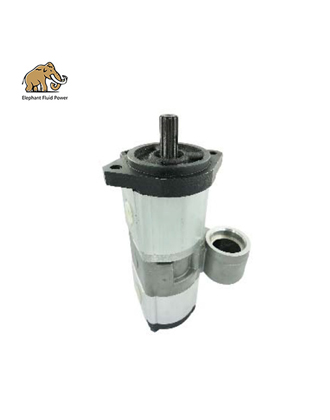
1. Gear pumps are the mainstream configuration for mini excavators. They convey hydraulic fluid through the rotation of two precisely meshed gears, offering advantages such as simple structure, low cost, and strong self-priming capability. However, they exhibit noticeable flow and pressure pulsations, making them suitable primarily for pilot systems and low-power applications. Common models include the XCMG 45B1-71A gear pump and the AP2D12 gear pump compatible with the Kubota U25.
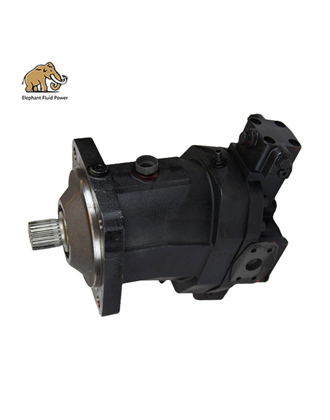
2. Piston pumps dominate as primary pumps in medium-to-large excavators due to their high pressure output and precise flow regulation. They achieve oil suction and compression through reciprocating piston movement within a cylinder block. Representative products include the Kawasaki K3V63DT-1R0R-9N0T main pump, compatible with Volvo EC140 excavators, delivering a maximum single-pump output pressure of 38MPa.
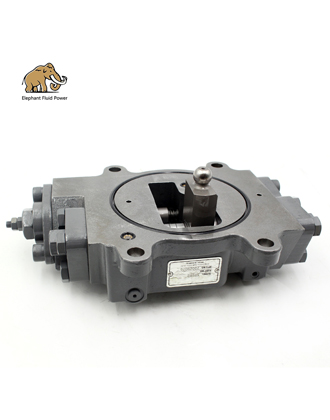
3. Variable displacement pumps automatically adjust output flow based on load changes, achieving over 30% energy savings compared to fixed displacement pumps. They are widely used in the main hydraulic systems of high-end models from Caterpillar, Hitachi, and others.
Second, Technical Parameters and Application Scenarios
1. Pressure Rating: Mini excavator pumps typically operate at 16-25MPa, suitable for light-duty applications like landscaping and indoor demolition. Main pumps for excavators over 20 tons reach 35-42MPa, meeting extreme demands such as mining rock crushing and heavy-duty excavation.
2. Flow Parameters: The HPV118 plunger pump installed in the Komatsu PC300-7 excavator delivers a maximum flow of 180 L/min, achieving a 40% increase in boom lifting speed.
Third, Working Principle of Excavator Hydraulic Pumps
The core function of an excavator hydraulic pump is to convert mechanical energy from the engine into hydraulic pressure energy, providing the fundamental power for machine operations. When the engine runs, it drives the internal plunger or gear mechanism of the hydraulic pump to rotate at high speed. Through the periodic change in sealed volume, hydraulic oil is drawn from the tank, pressurized, and ultimately delivered to the distribution valve. From there, it is distributed to various cylinders and motors, driving components like the boom, bucket, and tracks to perform actions.
During actual operation, the hydraulic system precisely controls the displacement of the main valve spool via the pilot valve in response to joystick commands. This regulates the flow rate and direction of high-pressure oil, enabling speed control and directional switching of the excavator's movements. Most modern excavators feature a dual-pump system: the main pump supplies high-pressure flow to drive working components, while the pilot pump delivers low-pressure fluid to control the control circuit, enabling lighter and more precise operation. If the main pump malfunctions, symptoms like slow boom lifting or weak digging power may occur. In such cases, inspect the pump for internal wear and replace core components like pistons or distributor plates if necessary.
Fourth, Excavator Hydraulic Pump Price
Factors such as model, supplier, origin, and purchase quantity influence excavator hydraulic pump pricing. For instance, genuine OEM parts typically cost 2-3 times more than aftermarket alternatives. Most suppliers offer tiered pricing, where larger purchase volumes result in lower unit costs.
If you're interested in excavator hydraulic pumps, feel free to contact us anytime. We offer transparent pricing with volume discounts and guarantee satisfactory service.
Who is the best excavator hydraulic pump supplier
Haw many hydraulic pumps does an excavator have