French
Portuguese
Russian
German
Spanish
Japanese
Korean
Irish
Greek
Turkish
Italian
Danish
Romanian
Indonesian
Czech
Afrikaans
Swedish
Polish
Basque
Catalan
Esperanto
Hindi
Lao
Albanian
Amharic
Armenian
Azerbaijani
Belarusian
Bengali
Bosnian
Bulgarian
Cebuano
Chichewa
Corsican
Croatian
Dutch
Estonian
Filipino
Finnish
Frisian
Galician
Georgian
Gujarati
Haitian
Hausa
Hawaiian
Hebrew
Hmong
Hungarian
Icelandic
Igbo
Javanese
Kannada
Kazakh
Khmer
Kurdish
Kyrgyz
Latin
Latvian
Lithuanian
Luxembourg
Macedoniar
Malagasy
Malay
Malayalam
Maltese
Maori
Marathi
Mongolian
Burmese
Nepali
Norwegian
Pashto
Persian
Punjabi
Serbian
Sesotho
Sinhala
Slovak
Slovenian
Somali
Samoan
Scots Gaelic
Shona
Sindhi
Sundanese
Swahili
Tajik
Tamil
Telugu
Thai
Ukrainian
Urdu
Uzbek
Vietnamese
Welsh
Xhosa
Yiddish
Yoruba
Zulu
As the core power source of an excavator, the stability and accuracy of a hydraulic pump's pressure output directly determine the equipment's operational efficiency, construction quality, and operational safety. Whether it is heavy-duty digging, high-altitude work, or fine leveling, every action of the excavator relies on the precise transmission of hydraulic pump pressure. Proper pressure control can not only enhance construction efficiency but also reduce equipment wear, extend the lifespan of the hydraulic system, and create greater economic benefits for construction companies.
The pressure of an excavator hydraulic pump is not fixed and must be adjusted flexibly according to construction conditions. Different work scenarios have significant variations in pressure requirements. During heavy-duty digging, the hydraulic pump pressure needs to be increased to provide sufficient digging power, ensuring successful penetration of hard soil layers and rocks. For fine operations, the pressure should be lowered and output stabilized to avoid damaging the workpiece or equipment components due to excessive pressure. Abnormal hydraulic pump pressure, whether too high or too low, can trigger a series of equipment malfunctions. Excessive pressure can lead to hydraulic oil leaks, pipeline bursts, or seal damage, while insufficient pressure can result in weak digging force and slow movements, severely affecting construction progress.
For pressure faults in excavator hydraulic pumps, maintenance personnel need to diagnose from a system-level perspective. First, a professional pressure gauge should be used to check the pressure at the pump outlet and the inlet of the actuators, comparing these values with the manufacturer’s technical specifications. Next, inspect the cleanliness and level of the hydraulic oil to rule out component wear caused by contamination. Finally, disassemble the hydraulic pump to measure the wear on critical mating surfaces such as the cylinder block, distribution plate, and plunger slipper. When replacing repair parts, it is crucial to choose high-quality components that fully match the original factory standards—if the clearance between the plunger and cylinder exceeds the limit, even a new pump may be unable to restore the rated pressure.
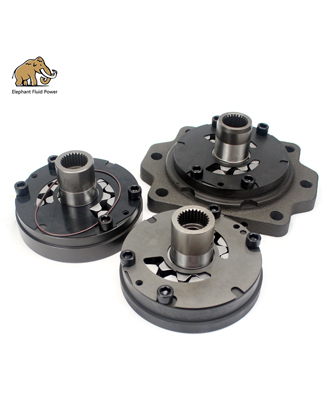
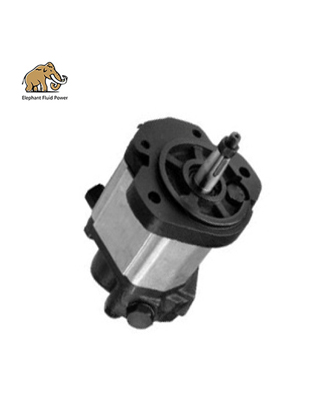
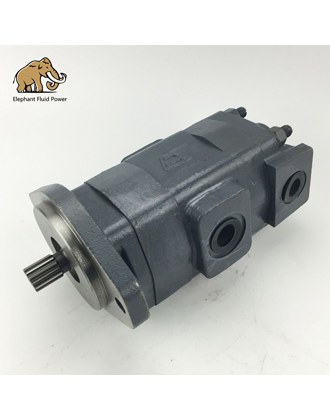
The key to accurately controlling excavator hydraulic pump pressure lies in the proper configuration of the hydraulic system and the quality assurance of its components. Elephant Hydraulic Power has been deeply engaged in the hydraulic field for many years and, leveraging its professional technical strength, provides comprehensive solutions for stable excavator hydraulic pump pressure. Relying on nearly 20 years of industry experience, Elephant accurately understands the pressure parameters of hydraulic pumps for different brands and models of excavators. The hydraulic pump components it produces are processed strictly according to original factory standards using precision CNC machines, ensuring component compatibility and sealing, preventing pressure abnormalities caused by component issues from the outset, and helping maintain stable pump pressure output.
In addition, regular maintenance and scientific regulation are key to maintaining stable pressure in excavator hydraulic pumps. It is recommended that construction units regularly check the purity and level of hydraulic oil, promptly replace aging seals, pressure valves, and other components to prevent pressure abnormalities caused by blockages from impurities. At the same time, pressure should be reasonably regulated according to the working conditions to avoid equipment wear from long-term high-pressure operation. With its rich industry experience, Elephant Company can provide customers with comprehensive maintenance guidance. Their technical team can respond within 2 hours under standard warranty and provide a complete solution within 1 working day, helping customers quickly resolve hydraulic pump pressure-related issues and ensuring normal equipment operation.
Elephant Fluid Power always adheres to the business principle of 'quality first, reputation first, zero complaints,' promoting high cost-performance products to the global market through a low-margin, high-volume pricing strategy. We understand that behind the stable pressure of each excavator lies the progress and operational efficiency of the customer’s projects. Choosing Elephant Hydraulic Power means choosing professional, efficient, and reliable maintenance support. For more information on hydraulic pump pressure maintenance or to purchase repair parts, please visit our official website or contact your dedicated sales engineer. Let us work together to inject lasting power into your equipment!
excavator hydraulic pump working principle
excavator hydraulic pumps for sale
excavator hydraulic pump types
used hydraulic pumps for excavators
excavator hydraulic pump rebuild
hydraulic pump for mini excavator
chinese excavator hydraulic pump
chinese mini excavator hydraulic pump