French
Portuguese
Russian
German
Spanish
Japanese
Korean
Irish
Greek
Turkish
Italian
Danish
Romanian
Indonesian
Czech
Afrikaans
Swedish
Polish
Basque
Catalan
Esperanto
Hindi
Lao
Albanian
Amharic
Armenian
Azerbaijani
Belarusian
Bengali
Bosnian
Bulgarian
Cebuano
Chichewa
Corsican
Croatian
Dutch
Estonian
Filipino
Finnish
Frisian
Galician
Georgian
Gujarati
Haitian
Hausa
Hawaiian
Hebrew
Hmong
Hungarian
Icelandic
Igbo
Javanese
Kannada
Kazakh
Khmer
Kurdish
Kyrgyz
Latin
Latvian
Lithuanian
Luxembourg
Macedoniar
Malagasy
Malay
Malayalam
Maltese
Maori
Marathi
Mongolian
Burmese
Nepali
Norwegian
Pashto
Persian
Punjabi
Serbian
Sesotho
Sinhala
Slovak
Slovenian
Somali
Samoan
Scots Gaelic
Shona
Sindhi
Sundanese
Swahili
Tajik
Tamil
Telugu
Thai
Ukrainian
Urdu
Uzbek
Vietnamese
Welsh
Xhosa
Yiddish
Yoruba
Zulu
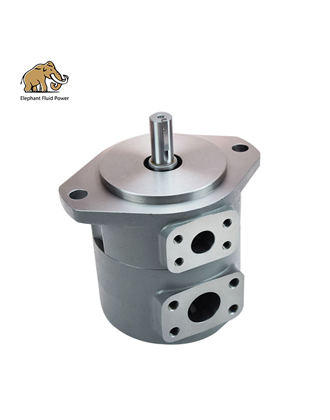
A hydram pump is a power component of a hydraulic system and is driven by an engine or a motor to absorb oil from the hydraulic oil tank, generate pressure oil discharge, and deliver it to the execution component. The hydram pump can be classified into gear pump, plunger pump, vane pump, and screw pump according to its structure. It is a hydraulic component that provides pressurized fluid for hydraulic transmission, which can convert the mechanical energy of the power machine (such as the electric motor and the internal combustion engine) into the pressure energy of the fluid. The working principle of the hydram pump is to change the pump chamber volume due to the movement, thereby compressing the fluid to provide pressure energy. The necessary condition is that the pump chamber has a sealable volume change.
There are many factors affecting the service life of a hydram pump. In addition to the design and manufacturing factors of the pump itself, the selection of related components (such as couplings, oil filters, etc.) and the operation during the trial run process are also related. So, will the misalignment of the shaft affect the service life of the hydram pump and hydro bearings?
All types of hydram pumps use hydro bearings to support the shaft. If the shaft is misaligned, it will also cause damage to the bearing. The improper alignment between the critical moving parts inside the hydram pump will affect the performance and the bearing life of the pump. When the internal working of the pump is normal, there will be a small gap between the hydro bearings and other moving parts. When the misalignment occurs, the gap will no longer be uniform, and the moving parts will now come into contact with each other. Gradually, the moving parts will generate friction and wear on each other. Friction will produce additional heat and cause overheating issues. In addition, small metal shavings may enter the hydraulic oil and contaminate the hydraulic oil. These shavings may jam in hoses, valves, and other such locations within the hydraulic system. As a result, the overall efficiency of the pump decreases. As you can probably guess, the excessive wear of the pump bearing leads to its eventual failure due to improper operation.
It can be seen that when the hydro bearings are misaligned, they will shorten the life of the pump. However, you can take some measures to help prevent misalignment issues. Some special tools are used in predictive maintenance plans to check for vibration, heat, and other such measures to confirm the possibility of misalignment. By using these tools as a part of your predictive maintenance plan, you can better identify and correct misalignment when it occurs. By resolving misalignment issues early, you will ensure that your hydram pump achieves maximum service life.