French
Portuguese
Russian
German
Spanish
Japanese
Korean
Irish
Greek
Turkish
Italian
Danish
Romanian
Indonesian
Czech
Afrikaans
Swedish
Polish
Basque
Catalan
Esperanto
Hindi
Lao
Albanian
Amharic
Armenian
Azerbaijani
Belarusian
Bengali
Bosnian
Bulgarian
Cebuano
Chichewa
Corsican
Croatian
Dutch
Estonian
Filipino
Finnish
Frisian
Galician
Georgian
Gujarati
Haitian
Hausa
Hawaiian
Hebrew
Hmong
Hungarian
Icelandic
Igbo
Javanese
Kannada
Kazakh
Khmer
Kurdish
Kyrgyz
Latin
Latvian
Lithuanian
Luxembourg
Macedoniar
Malagasy
Malay
Malayalam
Maltese
Maori
Marathi
Mongolian
Burmese
Nepali
Norwegian
Pashto
Persian
Punjabi
Serbian
Sesotho
Sinhala
Slovak
Slovenian
Somali
Samoan
Scots Gaelic
Shona
Sindhi
Sundanese
Swahili
Tajik
Tamil
Telugu
Thai
Ukrainian
Urdu
Uzbek
Vietnamese
Welsh
Xhosa
Yiddish
Yoruba
Zulu
The plunger pump is a very important device in the hydraulic system, which has a linking role. A radial piston pump is a piston pump in which the reciprocating direction of the piston or plunger is perpendicular to the drive shaft.
The way it works is, the driving torque is transmitted by the drive shaft to the star-shaped hydraulic cylinder rotor through the cross-coupling, and the stator is not subject to other lateral forces. The rotor is mounted on the valve shaft. The radially arranged plungers in the rotor abut against the eccentrically stroked stator by means of hydrostatically balanced sliding shoes. The plunger is connected to the sliding shoe ball hinge and is locked by a circlip. Two retaining rings hold the shoe on the stroke stator. As the pump rotates, it is pressed against the inner surface of the stator by centrifugal and hydraulic forces. When the rotor rotates, due to the fixed eccentricity, the plunger will reciprocate, and its stroke is twice the eccentricity of the stator. The eccentricity of the stator can be adjusted by two pistons on the pump body which are radially opposed to each other. The inflow and outflow of oil passes through the pump body and the flow channel on the distribution shaft, and is controlled by the oil suction port on the distribution shaft, and the hydraulic pressure generated in the pump body is absorbed by the surface of the static pressure balance. The static pressure balance of the friction pair adopts an overbalanced pressure compensation method, which forms an open-loop control. The bearing supporting the drive shaft only plays a supporting role and is not affected by other external forces.
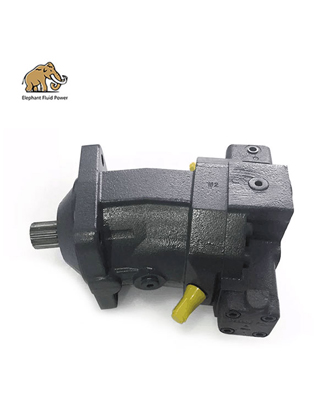
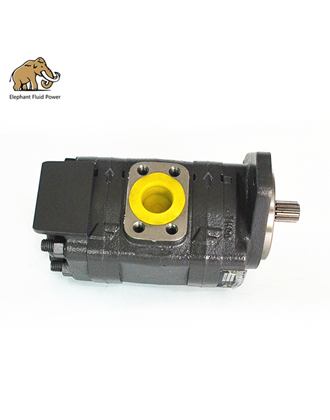
The hydraulic radial piston pump of the Elephant Fluid Power brand is very strong, has a long service life, and only produces low operating noise during operation. At the same time, it also has the advantages of short control response time and excellent adsorption characteristics. The plunger pump parts adopts a swash plate design, and more pumps can be installed through the drive unit. At the same time, our technical team has accumulated rich experience. Elephant Fluid has been adhering to the principle of quality first, efficiency is the pursuit and following the principle of service first, and is committed to helping customers solve problems encountered in the use of products. If you encounter any problems during the purchase process, please contact our customer service. We will be your most trusted partner!
radial piston pump types
radial piston pump pdf
radial piston pump uses
radial piston pump vs axial piston pump
radial piston pump working principle
radial piston pump manufacturer
hawe radial piston pump