French
Portuguese
Russian
German
Spanish
Japanese
Korean
Irish
Greek
Turkish
Italian
Danish
Romanian
Indonesian
Czech
Afrikaans
Swedish
Polish
Basque
Catalan
Esperanto
Hindi
Lao
Albanian
Amharic
Armenian
Azerbaijani
Belarusian
Bengali
Bosnian
Bulgarian
Cebuano
Chichewa
Corsican
Croatian
Dutch
Estonian
Filipino
Finnish
Frisian
Galician
Georgian
Gujarati
Haitian
Hausa
Hawaiian
Hebrew
Hmong
Hungarian
Icelandic
Igbo
Javanese
Kannada
Kazakh
Khmer
Kurdish
Kyrgyz
Latin
Latvian
Lithuanian
Luxembourg
Macedoniar
Malagasy
Malay
Malayalam
Maltese
Maori
Marathi
Mongolian
Burmese
Nepali
Norwegian
Pashto
Persian
Punjabi
Serbian
Sesotho
Sinhala
Slovak
Slovenian
Somali
Samoan
Scots Gaelic
Shona
Sindhi
Sundanese
Swahili
Tajik
Tamil
Telugu
Thai
Ukrainian
Urdu
Uzbek
Vietnamese
Welsh
Xhosa
Yiddish
Yoruba
Zulu
Do you know the source of hydraulic parts on the market? It's a long story. In 1795, Joseph Braman used water as the working medium in London and applied it to industry in the form of a hydraulic press, giving birth to the world's first hydraulic press. With the research and improvement of machine after generation, the hydraulic system that we use widely today has finally been formed. Hydraulic systems are widely used and greatly facilitate our lives. However, despite this, the hydraulic system still has the following two stubborn shortcomings, and no scientists have yet developed a complete solution:
1. Fever
Since the flow rate of each part of the power transmission medium (hydraulic oil) is different during the flow process, there is a certain internal friction inside the liquid, and there is also friction between the liquid and the inner wall of the pipeline, which is the reason for the temperature rise of the hydraulic oil. An increase in temperature leads to increased internal and external leakage, reducing its mechanical efficiency. At the same time, due to the high temperature, the hydraulic oil will expand, resulting in increased compressibility, so that the control action cannot be transmitted well. In this regard, we recommend that you avoid the use of elbows or use high-quality pipe fittings, pipe fittings, hydraulic valves, etc. in the layout of hydraulic lines.
2. Leakage
The leakage of the hydraulic system is divided into internal leakage and external leakage. Internal leakage refers to the leakage process that occurs inside the system, such as leakage on both sides of the hydraulic cylinder piston, leakage between the control valve spool and the valve body, etc. With an internal leak, established controls could be compromised until the system fails. External leaks are leaks that occur between the system and the external environment. The direct leakage of hydraulic oil into the environment will not only affect the working environment of the system, but also cause failures caused by insufficient system pressure. Hydraulic fluid leaking into the environment also presents a fire hazard. In this case, it is recommended that you use better quality seals to improve the processing accuracy of the equipment.
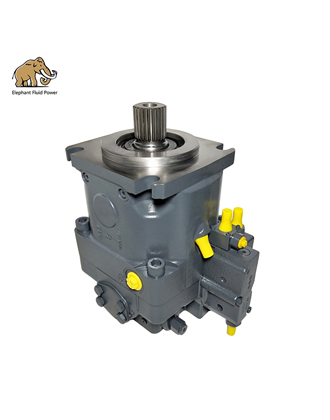
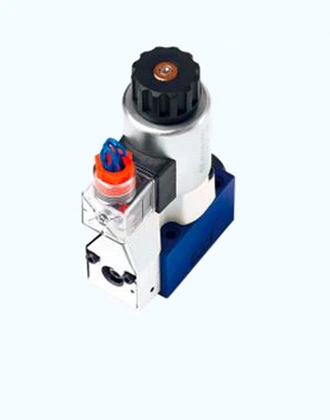
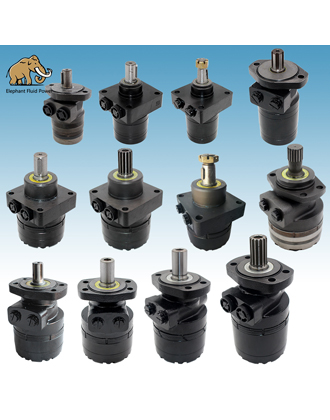
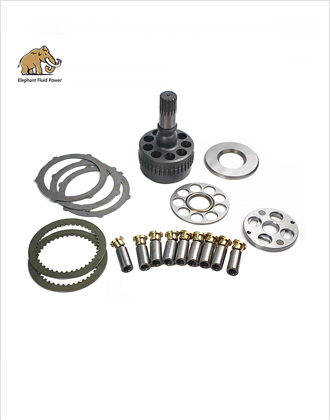
Although the above are the inherent characteristics of the hydraulic system, it is inevitable and we cannot eradicate them, but Elephant Liquid Power has been making reasonable improvements to it through professional technology to minimize the impact of these characteristics. We are specialists in producing hydraulic parts so many of our customers choose to order high volume hydraulic parts directly as a backup, our manufacturing facility has many CNC machines capable of production We work with materials such as cast iron/ductile iron, steel, bronze, cutting, lathes, machining center, heat treatment, grinding, honing, deburring and other technologies ensure the high precision, high finish and prevent leakage of hydraulic parts. Customers who have used it are full of praise.
Welcome to inquire!
hydraulic parts near me
attica hydraulic exchange
attica hydraulics
hydraulex
hydraulic parts
hps hydraulics
Elephant Fluid Power has been engaged in the hydraulic business since the beginning of the 20th century