French
Portuguese
Russian
German
Spanish
Japanese
Korean
Irish
Greek
Turkish
Italian
Danish
Romanian
Indonesian
Czech
Afrikaans
Swedish
Polish
Basque
Catalan
Esperanto
Hindi
Lao
Albanian
Amharic
Armenian
Azerbaijani
Belarusian
Bengali
Bosnian
Bulgarian
Cebuano
Chichewa
Corsican
Croatian
Dutch
Estonian
Filipino
Finnish
Frisian
Galician
Georgian
Gujarati
Haitian
Hausa
Hawaiian
Hebrew
Hmong
Hungarian
Icelandic
Igbo
Javanese
Kannada
Kazakh
Khmer
Kurdish
Kyrgyz
Latin
Latvian
Lithuanian
Luxembourg
Macedoniar
Malagasy
Malay
Malayalam
Maltese
Maori
Marathi
Mongolian
Burmese
Nepali
Norwegian
Pashto
Persian
Punjabi
Serbian
Sesotho
Sinhala
Slovak
Slovenian
Somali
Samoan
Scots Gaelic
Shona
Sindhi
Sundanese
Swahili
Tajik
Tamil
Telugu
Thai
Ukrainian
Urdu
Uzbek
Vietnamese
Welsh
Xhosa
Yiddish
Yoruba
Zulu
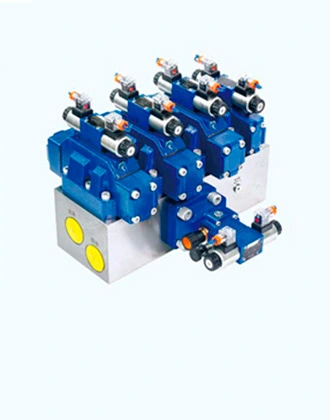
When it comes to the failure of hydraulic directional valves, this is also one of the more common faults. When we encounter this kind of fault, we need to find the cause and then eliminate it. So what are the reasons for the failure of hydraulic directional valves?
If the liquid flow rate is too small, the hydraulic directional valve may also become ineffective;
If the operator cannot control the directional valve accurately during use, the directional valve may also fail;
The excessive fit clearance between the spool and the valve hole causes a stuck phenomenon. After disassembling, use the grinding method to process the mating surface of the spool and the valve stem;
The suction force of the electromagnetic iron is smaller than the spring pre-tightening force, or the electromagnetic iron is damaged. At this time, a new electromagnetic iron should be replaced;
The hydraulic oil is dirty. The probability of this failure is very small, and it is not easy to encounter such a situation in actual operation;
Hydraulic directional valve installation problems lead to improper use, such as piston rod seals being damaged or seal rings aging, etc., which will cause this failure. Only by reasonably and correctly replacing corresponding parts can these situations be resolved;
Improper parameter selection in the adjustment program or failure to pay attention to the error value during construction can easily cause such accidents. Therefore, we need to observe carefully and refer to the relevant manual for a detailed understanding before operation, find the right position for operation and avoid other influences.
Although the installation of hydraulic directional valves is relatively simple and can be installed by people with strong hands-on ability. But installation is a meticulous job, and many aspects require our attention. Slight negligence may cause the valve to be used abnormally. So what should we pay attention to when installing hydraulic directional valves?
First, put the new hydraulic directional valve that needs to be replaced into the valve body. Note: the valve cover should be perpendicular to the sealing surface to ensure good contact between the two.
Then apply a small amount of machine oil on the valve cover to prevent rust and affect the sealing performance.
For valves with flow guide pipes, the flow guide pipe on the valve body needs to be cleaned before installation.
For high-pressure, large-diameter, and special requirements valves, the internal parts should be checked before installation to confirm that they meet the design requirements before installation.
Finally, check whether there is any dislocation or other defects in the sealing surface and other parts.