French
Portuguese
Russian
German
Spanish
Japanese
Korean
Irish
Greek
Turkish
Italian
Danish
Romanian
Indonesian
Czech
Afrikaans
Swedish
Polish
Basque
Catalan
Esperanto
Hindi
Lao
Albanian
Amharic
Armenian
Azerbaijani
Belarusian
Bengali
Bosnian
Bulgarian
Cebuano
Chichewa
Corsican
Croatian
Dutch
Estonian
Filipino
Finnish
Frisian
Galician
Georgian
Gujarati
Haitian
Hausa
Hawaiian
Hebrew
Hmong
Hungarian
Icelandic
Igbo
Javanese
Kannada
Kazakh
Khmer
Kurdish
Kyrgyz
Latin
Latvian
Lithuanian
Luxembourg
Macedoniar
Malagasy
Malay
Malayalam
Maltese
Maori
Marathi
Mongolian
Burmese
Nepali
Norwegian
Pashto
Persian
Punjabi
Serbian
Sesotho
Sinhala
Slovak
Slovenian
Somali
Samoan
Scots Gaelic
Shona
Sindhi
Sundanese
Swahili
Tajik
Tamil
Telugu
Thai
Ukrainian
Urdu
Uzbek
Vietnamese
Welsh
Xhosa
Yiddish
Yoruba
Zulu
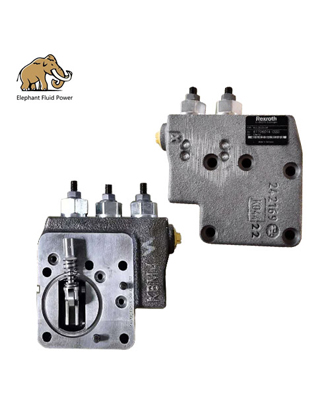
The A11VO hydraulic pump is a high-pressure variable-displacement piston pump developed by Bosch Rexroth of Germany specifically for open hydraulic circuits in mobile machinery. Featuring a swashplate variable-displacement design, it is compatible only with open hydraulic systems and serves as the mainstream main hydraulic pump for construction machinery.
1. A11VO: The standard base model, without a built-in centrifugal makeup pump; relies on self-priming for oil supply. Suitable for small to medium displacements (40–145), offering lower cost.
2. A11VLO: The extended, upgraded model, featuring an integrated makeup pump for forced suction and cavitation resistance. Mandatory for high-displacement (190, 260) and heavy-duty applications.
1. High-Pressure, Heavy-Duty: Rated continuous pressure of 350 bar, short-term peak of 400 bar, suitable for continuous loads in heavy-duty equipment;
2. Continuously Variable: Displacement continuously adjustable from 0 to maximum, with flow output on demand, significantly reducing overflow losses and saving fuel;
3. 100% through-shaft rear drive; a gear pump or plunger pump can be connected in series at the rear, allowing a single power source to drive multiple hydraulic circuits simultaneously;
4. Comprehensive control options: Mechanical hydraulic, pilot-operated hydraulic, and electro-proportional electronic control are available, making it suitable for fully automated construction machinery;
5. The constant-power curve can be externally adjusted during operation to quickly match the diesel engine’s power output on-site, preventing stalling;
6. High power density, cast iron housing, volumetric efficiency ≥94%, overall system efficiency exceeding 90%, low heat generation, and long service life.
Common failures of the A11VO hydraulic pump fall into three major categories: abnormal pressure and flow, unusual noise and vibration, and overheating and leakage. Industry statistics show that 60% of failures are caused by hydraulic fluid contamination, while the remainder are primarily related to improper maintenance and overload operation.
No pressure/only standby pressure: Incorrect motor rotation direction, low tank fluid level, or an LS valve stuck in the fully open position, or improper adjustment of the DR pressure cutoff valve, preventing the pump from establishing effective pressure.
Excessive Pressure Immediately Upon Startup: Abnormal feedback pressure at Port X, an LS valve spool stuck in the closed position, or the low-displacement adjustment screw set too high, causing the pressure cutoff to trigger as soon as the pump starts.
Insufficient Output Flow: Excessive internal wear and leakage in the pump, an LR constant-power valve set to too low a power rating, loss of drive motor speed, or improper setting of the maximum flow adjustment screw.
Abnormal Whining/ knocking sounds: Air entrained in the hydraulic fluid causes cavitation; uneven wear or scoring on the distribution plate generates pressure pulsations; bearing wear results in unstable rotation; and excessive misalignment of the coupling causes vibration.
Severe shaking of the pump body: Excessive clearance between the plunger and cylinder body; hydraulic fluid contamination causing the plunger to seize; loose installation; or prolonged operation under overload conditions.
Pump Overheating (>80℃): Severe internal wear causing significant internal leakage of high-pressure fluid and resulting heat generation; mismatched fluid viscosity; a clogged cooler; or a constantly open relief valve causing prolonged high-pressure overflow.
Shaft End Seal Leakage: Housing pressure exceeding the allowable 2 bar absolute pressure; incompatibility between the hydraulic fluid and the seal; lateral forces from the coupling causing one-sided wear on the shaft seal; or natural aging of the seal.
Are you currently considering purchasing an A11VO hydraulic pump? If you have any needs regarding this product, please feel free to contact us at any time. With over a decade of manufacturing experience, our company is now the largest manufacturer of hydraulic products in Northern China, operating three specialized production lines. We are confident we can provide you with a pleasant shopping experience.
Does A11VO need a charge pump
What is the power setting of the A11VO