Elephant Fluid Power Co., Ltd.

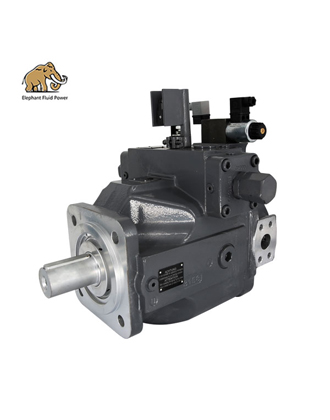
A11VO variable displacement pump

The A11VO Variable Displacement Pump is a high-pressure main pump developed by Bosch Rexroth specifically for open hydraulic circuits in mobile machinery. It is compatible only with open systems (tank-return configuration) and cannot be used in closed hydrostatic travel circuits.


First, Key Features

1. Swashplate variable displacement design with stepless adjustment from 0 to maximum displacement; output flow varies according to demand, saving energy and reducing consumption;

2. Rated continuous pressure of 350 bar and short-term peak pressure of 400 bar, ensuring stable performance under heavy-load, high-pressure conditions;

3. 100% through-shaft rear drive; a gear pump or a plunger pump of the same specification can be connected in series at the rear to achieve multi-pump parallel operation, simplifying the vehicle’s hydraulic layout;

4. A comprehensive range of control modules (hydraulic-mechanical, pilot-operated hydraulic, and electro-proportional) to accommodate various electronic and hydraulic control solutions for construction machinery;

5. The constant-power version supports external adjustment of the power curve during equipment operation, enabling rapid on-site matching to diesel engine horsepower;

6. High-strength cast iron housing, volumetric efficiency ≥94%, overall efficiency over 90%, with low heat generation and minimal oil consumption;

7. Standard SAE flanges and splined drive shafts, supporting both left-hand and right-hand rotation directions.


Second, Core Technical Parameters

1. Pressure Specifications

Rated continuous operating pressure: 350 bar (35 MPa)

Short-term peak pressure: 400 bar (40 MPa)

Adjustable pressure cutoff range: 50–350 bar

Housing drain requirements: Return to the tank via a dedicated line; absolute drain pressure ≤ 2 bar; pressurized return is prohibited

2. General Fluid and Environmental Parameters

Recommended hydraulic oil: ISO VG46 anti-wear hydraulic oil;

Operating oil temperature: -20°C to +80°C;

Oil cleanliness: NAS Grade 8 or better;

Standard Seals: NBR nitrile rubber; FKM fluorocarbon rubber is optional for high-temperature or fire-resistant applications;

Suction Restrictions: Standard A11VO suction vacuum ≤ 0.8 bar; for high-displacement applications, the A11VLO replenishment model must be selected to eliminate cavitation noise.


Third, Internal Structure and Variable Displacement Operating Principle

Main Component Configuration

1. Drive Shaft: Connects to the engine or power take-off (PTO) unit to drive the entire cylinder block in rotation;

2. Cylinder Block + 9 Sets of Piston-Slide Shoe Assemblies: The core hydraulic conversion components; the slide shoes closely contact the swash plate’s inclined surface; as the cylinder block rotates, the pistons reciprocate to perform oil suction and delivery;

3. Swash Plate + Servo Variable Piston: Adjusts the swash plate’s angle of inclination to directly control the piston stroke; the greater the swash plate angle, the higher the displacement; when the angle is zero, the output flow approaches 0;

4. Distribution Plate: A friction pair on the end face of the cylinder block that separates independent suction ports and high-pressure discharge ports, isolating high- and low-pressure fluid;

5. Integrated Control Valve Block: A one-piece valve assembly at the top of the pump that integrates pressure, power, and load-sensing control spools, determining the pump’s control logic;

6. Cast Iron Housing: Houses all internal components and features ports for suction, high-pressure discharge, pilot oil, and an independent drain;

7. A11VLO Exclusive: Built-in centrifugal makeup pump provides low-pressure makeup oil to flush friction pairs, enhancing suction stability at high speeds.


Principle of Operation

The drive shaft causes the cylinder block to rotate continuously, while the plunger follows the inclined plane of the swash plate to perform reciprocating linear motion:

1. Suction stroke: The plunger extends outward, increasing the volume of the cylinder chamber, and low-pressure hydraulic oil is drawn in through the suction port;

2. Pressure Stroke: The plunger retracts inward, reducing the chamber volume; the pressurized fluid is then discharged through the high-pressure port;

The control system uses pilot oil pressure to drive the servo piston, adjusting the swash plate angle in real time to achieve stepless flow variation. The pump delivers exactly the flow rate required by the load, eliminating excess overflow losses.


What is a charge pump A11VLO

What is the power setting of the A11VO