French
Portuguese
Russian
German
Spanish
Japanese
Korean
Irish
Greek
Turkish
Italian
Danish
Romanian
Indonesian
Czech
Afrikaans
Swedish
Polish
Basque
Catalan
Esperanto
Hindi
Lao
Albanian
Amharic
Armenian
Azerbaijani
Belarusian
Bengali
Bosnian
Bulgarian
Cebuano
Chichewa
Corsican
Croatian
Dutch
Estonian
Filipino
Finnish
Frisian
Galician
Georgian
Gujarati
Haitian
Hausa
Hawaiian
Hebrew
Hmong
Hungarian
Icelandic
Igbo
Javanese
Kannada
Kazakh
Khmer
Kurdish
Kyrgyz
Latin
Latvian
Lithuanian
Luxembourg
Macedoniar
Malagasy
Malay
Malayalam
Maltese
Maori
Marathi
Mongolian
Burmese
Nepali
Norwegian
Pashto
Persian
Punjabi
Serbian
Sesotho
Sinhala
Slovak
Slovenian
Somali
Samoan
Scots Gaelic
Shona
Sindhi
Sundanese
Swahili
Tajik
Tamil
Telugu
Thai
Ukrainian
Urdu
Uzbek
Vietnamese
Welsh
Xhosa
Yiddish
Yoruba
Zulu
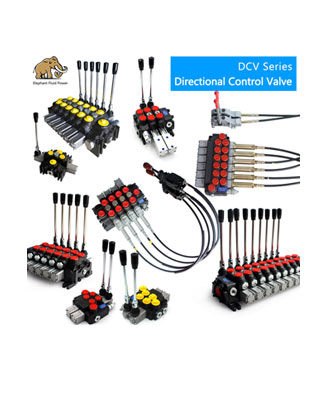
Directional valve with two or more flow patterns and two or more oil ports is a direction control valve. It is a valve that allows communication, cutoff and change of hydraulic oil flow, as well as the control of pressure unloading and sequential action. It can be divided into manual directional valve, electromagnetic directional valve, electro-hydraulic directional valve, etc. According to the number of working positions where the valve core stays in the valve body, it can be divided into two-position, three-position and so on; according to the number of oil circuits connected to the valve body, it can be divided into two-way, three-way, four-way and six-way, etc. The ways of operating the valve core movement include manual, mechanical, electric, hydraulic, and electro-hydraulic forms.
Manual directional valve is a direction control valve operated by a manual lever. It works to change the direction (change the direction of liquid flow) and switch (connect or disconnect the liquid flow) in a hydraulic system. Manual directional valve is a kind of unit that can be freely selected. It has two functions. One is like a differential lock on a car transmission. Even if the gears do not mesh, the shift can be completed when the output shaft angle of the engine reaches a certain value. The other is to control the pressure inside the oil passage by changing the direction of the liquid flow, thereby realizing the push, pull and exhaust of the oil cylinder. The manual directional valve has a multi-directional adjustable channel, which can change the direction of fluid flow timely. This kind of changing valve has extensive application in petroleum and chemical production, and is particularly used in the ammonia synthesis gas-making system. In addition, the directional valve can also be made into a valve flap structure, which is mostly used in small flow rate applications. When working, it is only necessary to rotate the handwheel to change the direction of the working fluid through the valve flap.
The manual directional valve is mainly composed of valve body, sealing components, cam, valve stem, handle and valve cover. The valve is driven by the handle, and the valve stem and cam are rotated by the handle. The cam has the function of positioning driving and locking the opening and closing of the sealing components. When the handle is rotated counterclockwise, the two sets of sealing components are closed under the action of the cam, and the two upper channels are respectively communicating with the inlet of the pipeline device. On the contrary, the two upper channels are closed, and the two lower channels are communicating with the inlet of the pipeline device, achieving non-stop switching.
Manual directional valve is widely used in hydraulic oil tank systems of construction machinery, coal mining machinery, chemical machinery, light industrial machinery, machine tools and other equipment, which can make the executing elements follow the required direction quickly and accurately, thus realizing arbitrary adjustment of the load.