French
Portuguese
Russian
German
Spanish
Japanese
Korean
Irish
Greek
Turkish
Italian
Danish
Romanian
Indonesian
Czech
Afrikaans
Swedish
Polish
Basque
Catalan
Esperanto
Hindi
Lao
Albanian
Amharic
Armenian
Azerbaijani
Belarusian
Bengali
Bosnian
Bulgarian
Cebuano
Chichewa
Corsican
Croatian
Dutch
Estonian
Filipino
Finnish
Frisian
Galician
Georgian
Gujarati
Haitian
Hausa
Hawaiian
Hebrew
Hmong
Hungarian
Icelandic
Igbo
Javanese
Kannada
Kazakh
Khmer
Kurdish
Kyrgyz
Latin
Latvian
Lithuanian
Luxembourg
Macedoniar
Malagasy
Malay
Malayalam
Maltese
Maori
Marathi
Mongolian
Burmese
Nepali
Norwegian
Pashto
Persian
Punjabi
Serbian
Sesotho
Sinhala
Slovak
Slovenian
Somali
Samoan
Scots Gaelic
Shona
Sindhi
Sundanese
Swahili
Tajik
Tamil
Telugu
Thai
Ukrainian
Urdu
Uzbek
Vietnamese
Welsh
Xhosa
Yiddish
Yoruba
Zulu
The excavator main pump serves as the core power component of the hydraulic system, converting the engine's mechanical energy into hydraulic energy to supply high-pressure oil for the excavator's movement, rotation, and digging operations. Below is a detailed introduction to the excavator main pump:
First, Types and Characteristics
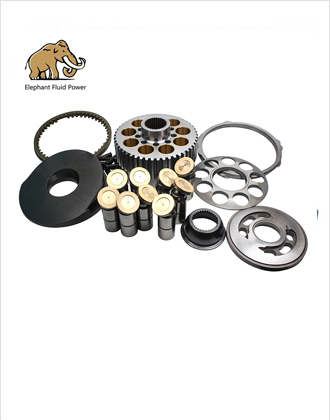
Excavator main pumps primarily utilize piston pumps, specifically swashplate axial piston pumps. These pumps feature the following characteristics:
1. High pressure and high efficiency: Plunger pumps can generate high pressure and operate with high efficiency, making them suitable for construction machinery like excavators that require both high pressure and high efficiency.
2. Adjustable flow rate: By altering the angle of the swashplate, the flow rate of the plunger pump can be adjusted to meet the demands of different operating conditions for the excavator.
3. Compact structure and long service life: Plunger pumps feature a compact design that occupies minimal space and offers a long service life, thereby reducing maintenance costs for the excavator.
Second, Working Principle
The excavator's main pump operates by using the engine to drive the pump shaft, causing the pistons to reciprocate within their sleeves and generate high-pressure oil. This high-pressure oil is delivered through various lines to hydraulic actuators (such as cylinders and motors), enabling operations like digging, loading, and pushing.
Third, Common Faults and Solutions
During operation, the excavator main pump may encounter issues such as engine overload, low pump output flow, failure to build pressure, vibration, or excessive noise. The following troubleshooting methods can be applied:
1. Engine Overload: Verify if the pressure cutoff setting is too high, if the regulator torque setting is excessive, if internal pump components are burnt or damaged, or if regulator piping is incorrectly routed. Adjust settings or replace components based on inspection findings.
2. Low Pump Output Flow or Failure to Build Pressure: Inspect the regulator, internal pump components, auxiliary pumps, and auxiliary valves for faults. Repair or replace components based on inspection findings. Simultaneously, ensure the regulator piping and venting are correctly configured.
3. Vibration and Noise: Check for pump dry running, cloudy operating oil, damaged piston bushing rivets, cylinder body cracks, or improper pump installation. Address these issues by preventing dry running, replacing piston bushings or cylinder bodies, and ensuring correct pump installation.
Fourth, Maintenance Recommendations
1. Regularly inspect the main pump's oil level and quality. Promptly replace hydraulic oil and clean the pump's interior.
2. Periodically check the main pump's installation and connections to ensure secure mounting and reliable connections.
3. Avoid prolonged idling of the main pump. Regularly start the pump and operate it for short periods.
Main hydraulic pump diagram
Excavator hydraulic pump types
excavator hydraulic pump pressure
excavator hydraulic pump parts
excavator hydraulic pump price
excavator hydraulic pump repair
excavator pump
excavator hydraulic pump parts name