French
Portuguese
Russian
German
Spanish
Japanese
Korean
Irish
Greek
Turkish
Italian
Danish
Romanian
Indonesian
Czech
Afrikaans
Swedish
Polish
Basque
Catalan
Esperanto
Hindi
Lao
Albanian
Amharic
Armenian
Azerbaijani
Belarusian
Bengali
Bosnian
Bulgarian
Cebuano
Chichewa
Corsican
Croatian
Dutch
Estonian
Filipino
Finnish
Frisian
Galician
Georgian
Gujarati
Haitian
Hausa
Hawaiian
Hebrew
Hmong
Hungarian
Icelandic
Igbo
Javanese
Kannada
Kazakh
Khmer
Kurdish
Kyrgyz
Latin
Latvian
Lithuanian
Luxembourg
Macedoniar
Malagasy
Malay
Malayalam
Maltese
Maori
Marathi
Mongolian
Burmese
Nepali
Norwegian
Pashto
Persian
Punjabi
Serbian
Sesotho
Sinhala
Slovak
Slovenian
Somali
Samoan
Scots Gaelic
Shona
Sindhi
Sundanese
Swahili
Tajik
Tamil
Telugu
Thai
Ukrainian
Urdu
Uzbek
Vietnamese
Welsh
Xhosa
Yiddish
Yoruba
Zulu
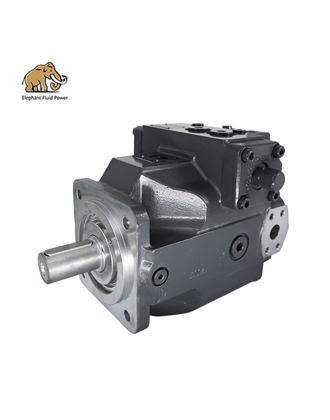
Hydraulic motors are actuators within hydraulic systems, whose core function is to convert the fluid pressure energy supplied by hydraulic pumps into mechanical energy (torque and rotational speed) to drive loads in rotational motion.
First, Basic Working Principle
Hydraulic motors operate by utilizing changes in sealed working volumes. When high-pressure oil enters the motor's working chamber, the pressure differential drives internal components (such as pistons, vanes, or gears) to move, generating torque and rotating the output shaft. From an energy conversion perspective, it is reversible with a hydraulic pump: a pump inputs mechanical energy to output hydraulic energy, while a motor inputs hydraulic energy to output mechanical energy.
Second, Core Classification and Characteristics
Based on rated speed and structural form, hydraulic motors are primarily categorized as follows:
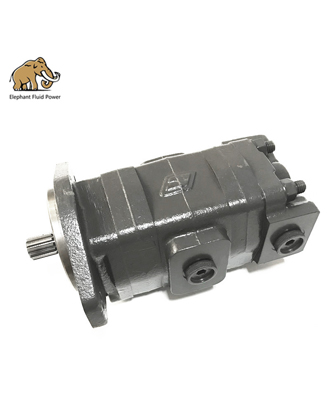
1. Gear Motors: Compact, shock-resistant, and insensitive to contamination, but with lower efficiency and significant pulsation. Primarily used in agricultural machinery and simple transmission systems.
2. Vane Motors: Smooth rotation, low noise, and minimal inertia, but with relatively high leakage. Mainly applied in medium-to-low pressure industrial equipment. 3. Piston Motors: High-Speed Motors: Axial piston type, featuring high efficiency and speed, requiring use with a reducer.
Low-speed motors: Radial piston type, high torque, excellent low-speed stability. Primarily used in excavator drives, marine winches, and heavy lifting applications.
Third, Key Differences from Hydraulic Pumps
Despite structural similarities, significant differences exist due to varying operating conditions:
1. Symmetry: Motors require bidirectional operation, typically featuring fully symmetrical internal structures.
2. Drain Port: Beyond inlet and outlet ports, motors usually feature a dedicated drain port to evacuate leakage oil from the housing.
3. Starting Performance: Motors require initial sealing integrity to ensure starting torque and must operate stably across a wide speed range.
Fourth, Hydraulic Motor Failures and Repair Measures
Hydraulic motor failures are typically caused by oil contamination, overheating, or air ingress. Below are three most common failure types and their troubleshooting solutions:
External or Internal Leaks
1. Shaft End Leakage: Often caused by seal failure due to prolonged friction between the oil seal and output shaft. Replace the oil seal; if the shaft journal is severely worn, repair or replace the shaft.
2. Flange Joint Leakage: Caused by aged O-rings on the cover, loose bolts, or contamination. Replace seals and tighten bolts to specified torque.
3. Excessive internal leakage: Wear on the distributor plate, piston, or stator body causes excessive clearance, resulting in slow or weak operation under load. Grind the end faces, hone the cylinder bores, or re-assemble critical components.
Unstable Speed or Weak Power
1. Insufficient oil supply: Clogged filters, low oil volume, or low pump efficiency fail to meet flow demands. Clean the filter element, replenish oil, and inspect the pump condition.
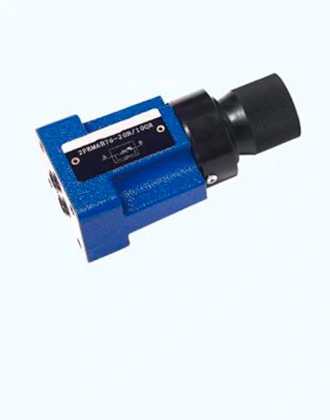
2. System pressure fluctuations: Unstable or stuck relief valve adjustment. Disassemble and clean the relief valve, then reset the pressure.
3. Oil issues: Viscosity thinning due to temperature rise or air entrainment (cavitation). Improve the cooling system, purge air from the lines, and replace with compliant oil.
Abnormal Noise and Vibration
1. Air Ingestion: Misaligned couplings or leaky suction line seals introduce air. Correct alignment and tighten connections to prevent air ingress.
2. Mechanical Wear: Damaged bearings or poor blade-stator contact cause impact noise. Replace bearings or damaged components promptly to prevent debris entering the circulation system.
Hydraulic motor dimensions
Hydraulic motor types