French
Portuguese
Russian
German
Spanish
Japanese
Korean
Irish
Greek
Turkish
Italian
Danish
Romanian
Indonesian
Czech
Afrikaans
Swedish
Polish
Basque
Catalan
Esperanto
Hindi
Lao
Albanian
Amharic
Armenian
Azerbaijani
Belarusian
Bengali
Bosnian
Bulgarian
Cebuano
Chichewa
Corsican
Croatian
Dutch
Estonian
Filipino
Finnish
Frisian
Galician
Georgian
Gujarati
Haitian
Hausa
Hawaiian
Hebrew
Hmong
Hungarian
Icelandic
Igbo
Javanese
Kannada
Kazakh
Khmer
Kurdish
Kyrgyz
Latin
Latvian
Lithuanian
Luxembourg
Macedoniar
Malagasy
Malay
Malayalam
Maltese
Maori
Marathi
Mongolian
Burmese
Nepali
Norwegian
Pashto
Persian
Punjabi
Serbian
Sesotho
Sinhala
Slovak
Slovenian
Somali
Samoan
Scots Gaelic
Shona
Sindhi
Sundanese
Swahili
Tajik
Tamil
Telugu
Thai
Ukrainian
Urdu
Uzbek
Vietnamese
Welsh
Xhosa
Yiddish
Yoruba
Zulu
Hydraulic Motor Speed Control Valve plays a crucial role in hydraulic systems, especially in adjusting the system's operating speed and controlling torque. Understanding how the hydraulic motor speed control valve affects torque when adjusting to low speed can help better optimize the performance of the hydraulic system. This article will explore in detail the basic concepts of the hydraulic motor speed control valve, the specific impact on torque when reducing speed, and how to properly use the hydraulic motor speed control valve.
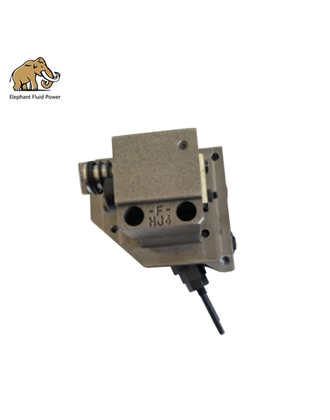
Hydraulic motor speed control valve is a key component used to control the flow rate of hydraulic motors or hydraulic cylinders. It typically consists of a valve body, valve core, spring, adjusting nut, and throttling device. The main function of the hydraulic motor speed control valve is to regulate the flow rate of the hydraulic medium in the hydraulic system to achieve precise control of system speed and torque. By adjusting the position of the valve core and the size of the throttle orifice of the hydraulic motor speed control valve, users can flexibly adjust the flow rate and operating speed of the hydraulic system, thereby improving production efficiency and system stability.
Hydraulic motor speed control valve's impact on torque when adjusting to low speed is a noteworthy issue. The hydraulic motor speed control valve achieves speed adjustment by controlling the flow rate of the hydraulic medium. When the hydraulic motor speed control valve is adjusted to low speed, the flow rate of the hydraulic medium will reduce. This reduced flow rate directly leads to a decrease in the output torque of the hydraulic system. The specific impact depends on the operating principle and adjustment method of the hydraulic motor speed control valve.
The hydraulic motor speed control valve reduces the flow rate of the hydraulic medium through the throttling device during low-speed adjustment, thereby reducing the torque in the system. This is because the output torque of a hydraulic motor is proportional to the flow rate. When the flow rate decreases, the torque will also decrease accordingly. Additionally, the adjustment method of the hydraulic motor speed control valve will also impact the torque; different types of speed control valves may exhibit different torque variation characteristics at low speeds.
Understanding the torque changes when the hydraulic motor speed control valve is adjusted to low speed helps engineers and operators make more accurate decisions when designing and adjusting hydraulic systems. Choosing the appropriate hydraulic motor speed control valve based on specific application needs and making proper adjustments can ensure that the hydraulic system maintains the required performance and stability during low-speed operations.
Hydraulic motor speed control valve does influence torque during low-speed adjustments, and this influence mainly depends on the working principle and adjustment method of the speed control valve. In hydraulic systems, the hydraulic motor speed control valve regulates system speed and torque by controlling the flow rate of the hydraulic medium. When the flow rate is reduced, the system's output torque will also decrease accordingly. Knowing the characteristics of different types of hydraulic motor speed control valves and choosing an appropriate adjustment method can effectively optimize the performance of the hydraulic system and ensure stable operation of the equipment.