French
Portuguese
Russian
German
Spanish
Japanese
Korean
Irish
Greek
Turkish
Italian
Danish
Romanian
Indonesian
Czech
Afrikaans
Swedish
Polish
Basque
Catalan
Esperanto
Hindi
Lao
Albanian
Amharic
Armenian
Azerbaijani
Belarusian
Bengali
Bosnian
Bulgarian
Cebuano
Chichewa
Corsican
Croatian
Dutch
Estonian
Filipino
Finnish
Frisian
Galician
Georgian
Gujarati
Haitian
Hausa
Hawaiian
Hebrew
Hmong
Hungarian
Icelandic
Igbo
Javanese
Kannada
Kazakh
Khmer
Kurdish
Kyrgyz
Latin
Latvian
Lithuanian
Luxembourg
Macedoniar
Malagasy
Malay
Malayalam
Maltese
Maori
Marathi
Mongolian
Burmese
Nepali
Norwegian
Pashto
Persian
Punjabi
Serbian
Sesotho
Sinhala
Slovak
Slovenian
Somali
Samoan
Scots Gaelic
Shona
Sindhi
Sundanese
Swahili
Tajik
Tamil
Telugu
Thai
Ukrainian
Urdu
Uzbek
Vietnamese
Welsh
Xhosa
Yiddish
Yoruba
Zulu
The excavator pump is one of the core components of an excavator, responsible for converting mechanical energy into hydraulic pressure energy to power the machine's various operations. Below is a detailed introduction to excavator hydraulic pumps:
First, Types and Characteristics
Excavator hydraulic pumps primarily come in two types: gear pumps and plunger pumps, each with distinct features:
1. Gear Pump:
Working Principle: Operates by creating sealed displacement through the rotation of two meshing gears.
Characteristics: Simple structure, easy manufacturing, low cost, compact size, light weight, good self-priming capability, insensitivity to oil contamination, and reliable operation. However, they exhibit significant flow and pressure pulsations, high noise levels, and non-adjustable displacement.
Applications: Primarily used for low-precision, medium-to-low pressure control systems. Commonly employed in machinery with modest pressure requirements, such as excavator pilot pumps.
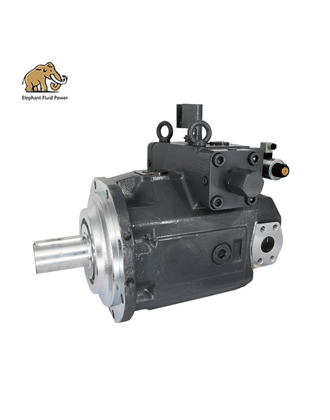
2. Piston Pump:
Working Principle: Provides power through the reciprocating motion of a piston.
Features: High operating pressure (typically 20–40 MPa, up to 1000 MPa), compact structure, high efficiency, easy flow adjustment, minimal pulsation, and variable displacement capability. However, it has the poorest self-priming performance and high cost.
Applications: Primarily used for high-precision, high-pressure control in high-pressure systems and construction machinery, such as excavator main pumps.
Second, Role in Excavators
Within excavators, hydraulic pumps typically form part of the hydraulic transmission system alongside hydraulic oil lines, hydraulic motors, and hydraulic cylinders, with hydraulic control managed by directional control valves. Specifically:
1. Main Pump: Typically a plunger pump delivering high-pressure hydraulic fluid to power the hydraulic travel motor, hydraulic swing motor, and hydraulic cylinders, enabling the excavator's movement, rotation, and digging functions.
2. Pilot Pump: Usually a gear pump supplying lower-pressure hydraulic fluid to the directional control valve, which controls the excavator's various operations.
Third, Common Faults and Solutions
1. Engine Overload: Inspect the hydraulic pump's load condition. Adjust the load or replace with a suitable hydraulic pump.
2. Low Pump Output Flow or Inability to Build Pressure: Check for blockages in the pump's suction and discharge ports, ensure hydraulic fluid cleanliness, and inspect for internal pump component wear. Based on findings, clean components, replace hydraulic fluid, or replace worn parts.
3. Vibration and Noise: Verify secure pump mounting, inspect hydraulic lines for looseness or damage, and examine pump components for loose or broken parts. Address issues by tightening connections, replacing hydraulic lines, or replacing damaged components.
Elephant Fluid Power Technical team has many years of operation and service experience, Provide customers with professional hydraulic system solutions, Quality assurance of quality products. If you need excavator pump, please contact us.
Best hydraulic pump for excavators
Excavator hydraulic pump types
Excavator hydraulic pumps