Elephant Fluid Power Co., Ltd.

Excavator main pump types

The excavator main pump is the core component of an excavator's hydraulic system, providing power for various excavator operations.


First, Types

1. Gear Pump

  • Working Principle: Two or more gears mesh and rotate within the pump housing. As the gears turn, they disengage on the suction side, creating a vacuum that draws in oil. On the discharge side, the gears mesh, forcing oil out to complete the suction and discharge cycle.

  • Applications: Typically used in compact excavators or auxiliary hydraulic systems with low pressure requirements. Examples include small household or agricultural excavators with relatively light workloads, where gear pumps adequately meet basic operational needs.


2. Vane Pump

  • Working Principle: Utilizes the sliding motion of vanes within their slots as the rotor rotates to alter the volume of sealed chambers, achieving suction and discharge. When the rotor rotates, the vanes slide against the inner surface of the stator under the combined action of centrifugal force and pressurized oil. In the suction zone, the sealed chamber volume gradually increases, drawing in oil; in the discharge zone, the sealed chamber volume gradually decreases, forcing oil out.

  • Application Scenarios: Commonly used in medium-sized excavators, its characteristics of uniform flow and low noise provide stable hydraulic power for excavators. Suitable for applications demanding high operational stability and comfort.


3. Plunger Pump

  • Working Principle: Oil suction and discharge are achieved by altering the volume of the sealed working chamber through the reciprocating motion of the plunger within the cylinder. When the plunger extends outward, the sealed working chamber expands to draw in oil. When the plunger retracts inward, the chamber shrinks to force oil out.

  • Application Scenarios: Widely used in large excavators and applications demanding high pressure and flow rates. Its capability to generate high pressure and substantial flow meets the power requirements for heavy-duty excavation, powerful lifting, and similar tasks.


Second, Primary Functions

1. Power Supply: Serves as the hydraulic system's power source, converting the engine's mechanical energy into hydraulic energy. This provides robust power to the excavator's working components (such as the boom, stick, bucket, etc.) and travel mechanisms, enabling the machine to perform various digging, loading, and movement operations.


2. Motion Control: By adjusting the main pump's flow rate and pressure, it precisely regulates the speed and force of each excavator actuator. This enables accurate operation of the excavator's movements, enhancing work efficiency and task quality.


Third, Common Faults and Causes

1. Insufficient pump output pressure: This may result from severe wear of internal pump components, such as excessive clearance between the piston and cylinder block or distributor plate, leading to increased leakage. Alternatively, it could stem from malfunctioning pump adjustment mechanisms that fail to regulate pressure properly.


2. Unstable pump output flow: Possible causes include blockage of the pump's suction port, hindering smooth oil intake; air ingress into the hydraulic fluid causing cavitation; or unstable pump rotational speed influenced by engine operating conditions.


3. Abnormal Noise and Vibration: May result from loose pump mounting causing operational vibration; internal component damage like gear wear or vane fracture; or improper oil viscosity and contaminants in the oil, all contributing to abnormal noise and vibration during operation.


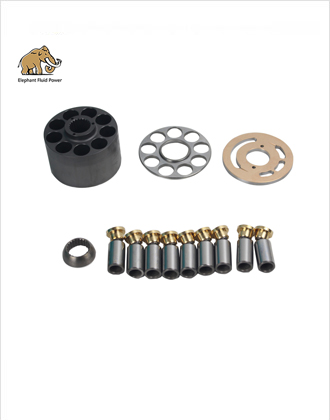
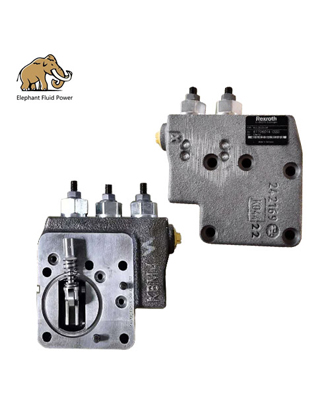
Main hydraulic pump diagram

Excavator hydraulic pump types